If you are choosing or customizing Compact Powder Cases, there is more to explore beyond their shape and color: where is the powder held, how does the lid open and stay closed, and where do the mirror and puff fit?
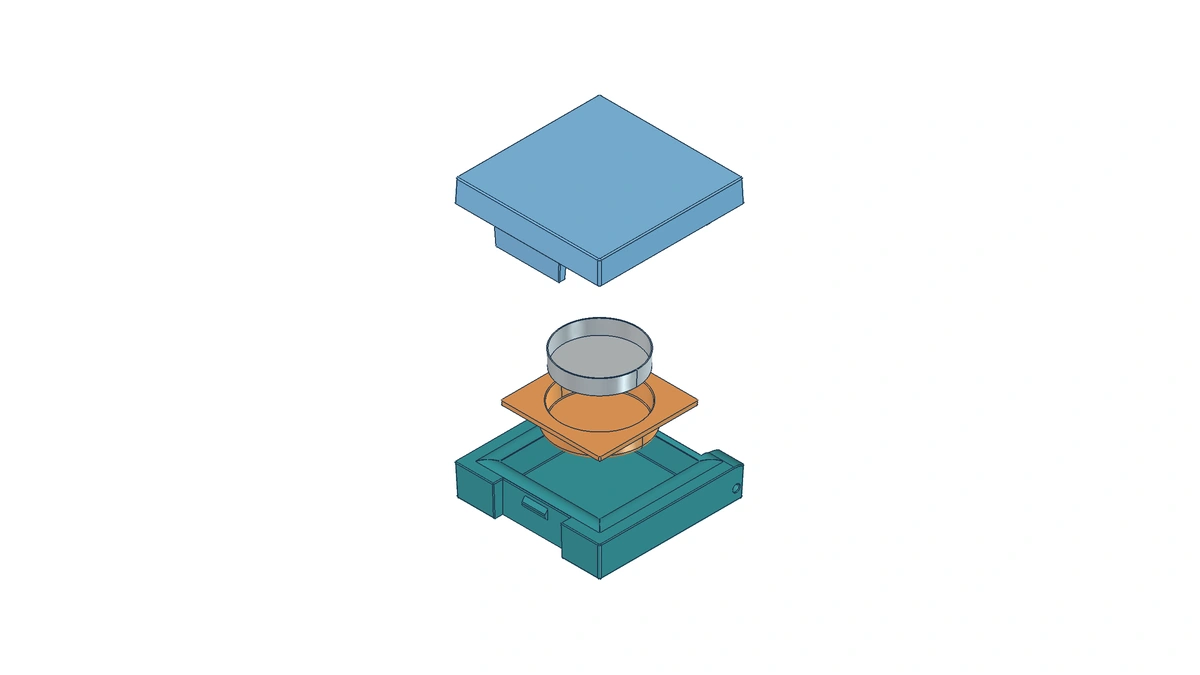
Using a hinged compact powder case from Sambound as an example, the exploded views below show where each component sits and what it does.
Basic Structure of a Compact Powder Case
The lid and base shell form the outer profile of this compact powder case. A separate insert sits inside, with a circular recess in the center to accommodate the aluminum pan. Once the pan is placed in the recess, its base supports the powder, and its walls contain it. The insert positions the pan in the center of the case.
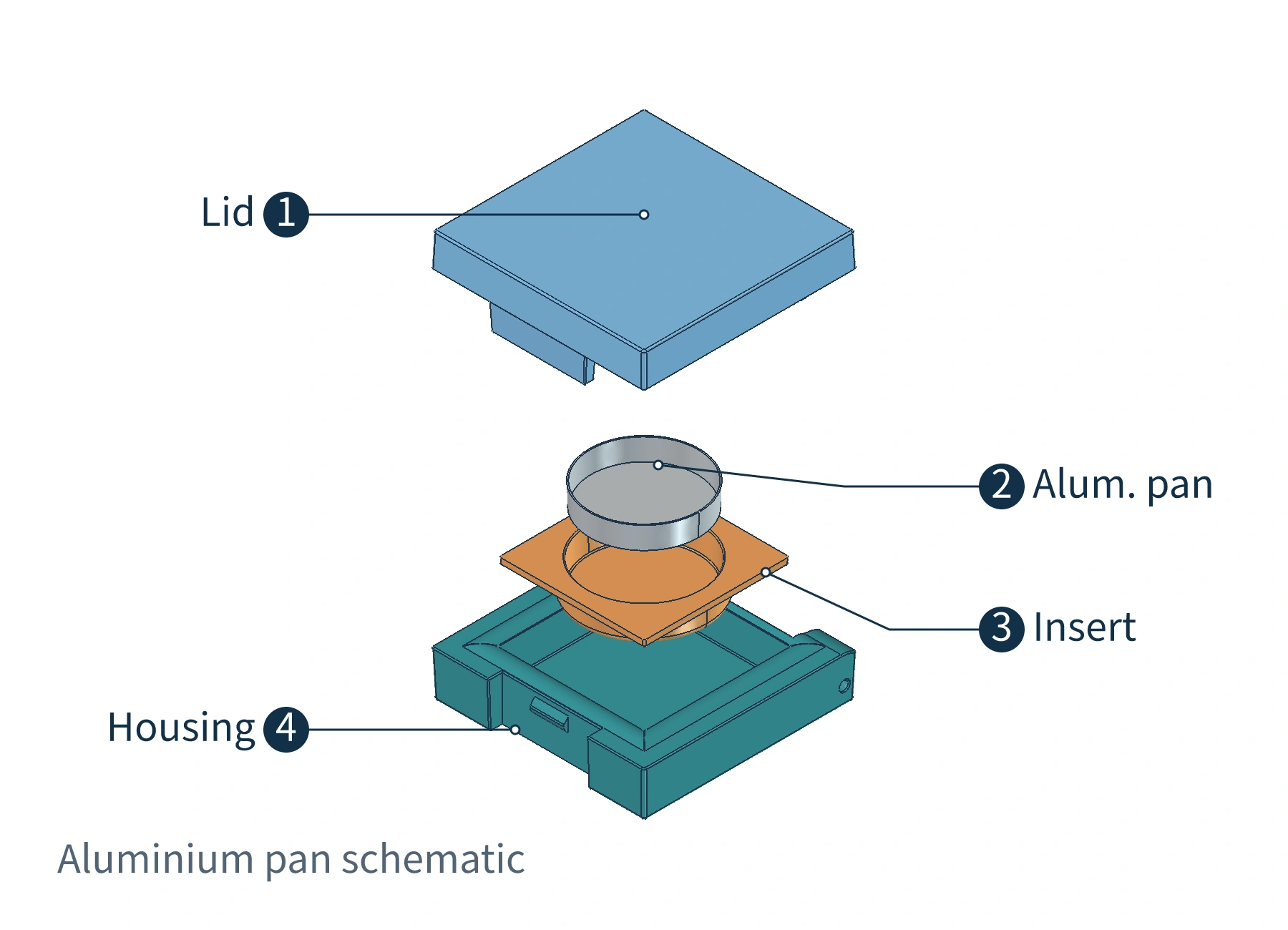
It is also useful to distinguish separate parts from functional features formed on those parts. The lid, base shell, insert, and aluminum pan are separate components. A hinge and a latch, however, describe structures that allow the case to open and close. Some of their features can be formed directly on the lid or base shell, so the number of named functions does not equal the number of separate parts.
The Lid and Base Shell
The lid sits above the case. When closed, it covers the area that holds the contents and forms the outer case together with the base shell. A mirror can be fitted inside the lid, while some designs have a transparent viewing area.
A mirror reflects the user’s face so they can check their makeup. A transparent viewing area lets them see the color of the cosmetic product through the lid. These serve different purposes; a transparent lid should not be called a mirror.
The base shell is the lower outer part of the case. It provides space to accommodate and support the insert and aluminum pan. Follow the outer edges downward in the exploded view to find the base shell, then look at how the insert sits inside it.
The assembly fits together from the outside inward: the base shell accommodates the insert, the insert’s recess accommodates the aluminum pan, and the pan holds the cosmetic product. The aluminum pan directly contacts and holds the powder. The bottom of the case and the recess should not both be referred to as the powder pan.
How the Insert Differs from the Aluminum Pan
The insert sits inside the outer shell. Its perimeter fits the space inside the case, and its central recess provides an installation position for the aluminum pan. The recess opening, depth, and sidewall shape need to match the pan’s outer shape.
The aluminum pan is a separate thin-walled container with a base and surrounding walls. The base supports the powder, while the walls define the space that holds it. Products such as pressed face powder and pressed eyeshadow can be filled and pressed in an aluminum pan before the pan is fitted into the outer case.
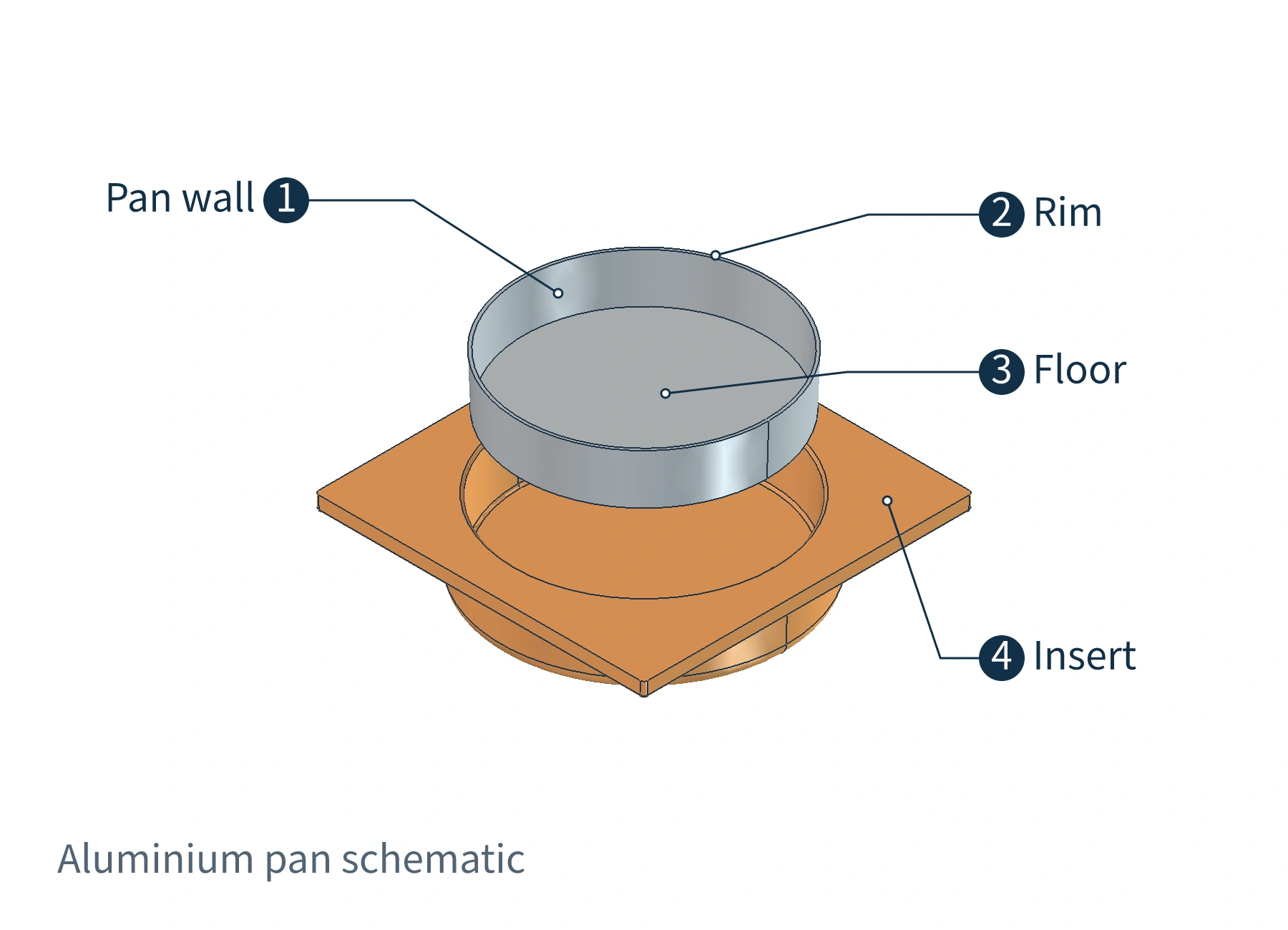
The recess in the insert is the pan’s installation position; the aluminum pan is the container that holds the powder.
The pan’s thickness and depth are different dimensions. Thickness describes how thick the material forming the base or walls is. Depth is the distance from the pan opening to its base. A deep pan can still be made from thin material. The illustrated pan’s nominal thickness of 0.23 mm is used only for the structural schematic and does not represent a measured specification for this product. Actual thickness, forming details, and the method of securing the pan depend on the documentation for that particular part.
Being able to separate the aluminum pan in a three-dimensional model does not mean the user can replace it. An exploded view shows which parts make up the assembly. Whether the pan is replaceable depends on how the actual product secures it and allows it to be removed.
Hinges and Latches
When a hinged compact powder case opens, the lid remains connected to the base shell and rotates around that connection. The structure that provides this rotating connection is the hinge.
The hinge lugs and transverse holes at the rear of the lid and base shell are the mating features at this connection.
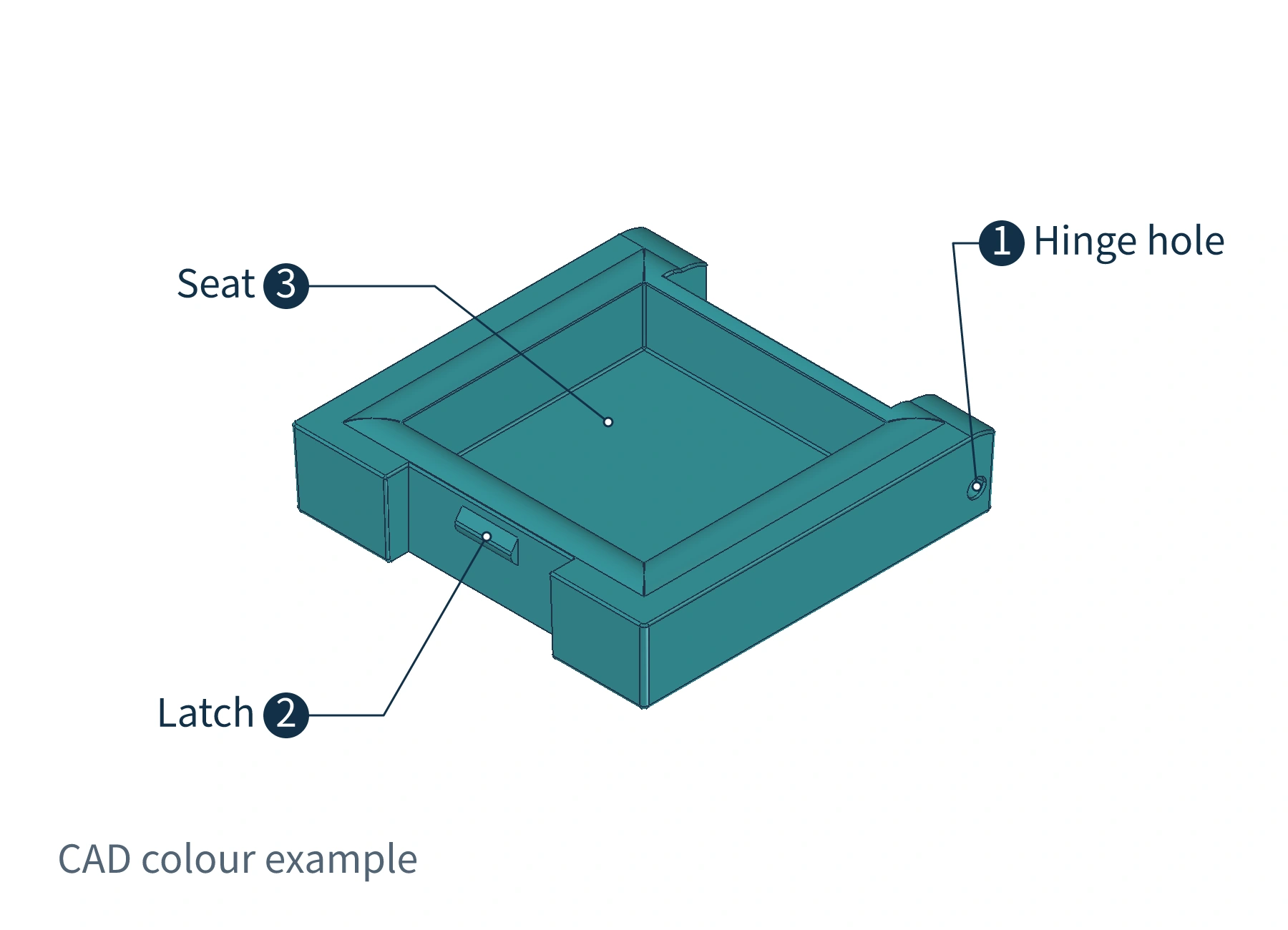
Once the lid rotates back to its closed position, the front latch structure keeps it shut. In this example, a projecting latch feature on the front of the base shell mates with a corresponding feature on the front edge of the lid when the case closes.
A latch holds the case closed through mating features. In an elastic snap-fit design, the latch passes over the corresponding edge and engages its mating feature. The contact surfaces then prevent the lid from opening outward. To open the lid again, this engagement must be released. Which feature flexes depends on the actual design.
The hinge provides the connection and rotation; the latch keeps the case closed. Latching alone does not establish airtightness. Sealing requires suitable continuous contact surfaces, sealing elements, or another defined sealing design, and its effectiveness must be verified.
Mirrors, Puff Compartments, and Inner Covers
Beyond the basic structure, Compact Powder Cases may include mirrors, spaces for applicators, and dividers, depending on the design.
| Component or feature | Location | Main function |
|---|---|---|
| Mirror | Often fitted inside the lid | Helps the user check their makeup after opening the case |
| Puff or applicator compartment | Beside the area holding the cosmetic product, or on a separate level | Provides storage space for a puff or brush |
| Divider or inner cover | Above the contents or between two compartments | Separates the area holding the cosmetic product from applicator storage. A sealing function also requires a suitable sealing structure. |
These features are not all present in every compact powder case. To understand a particular design, first follow the assembly from the outer case to the insert and then the aluminum pan. Next, look at how the rear connection works, how the front closes, and where the mirror and puff space are arranged.