
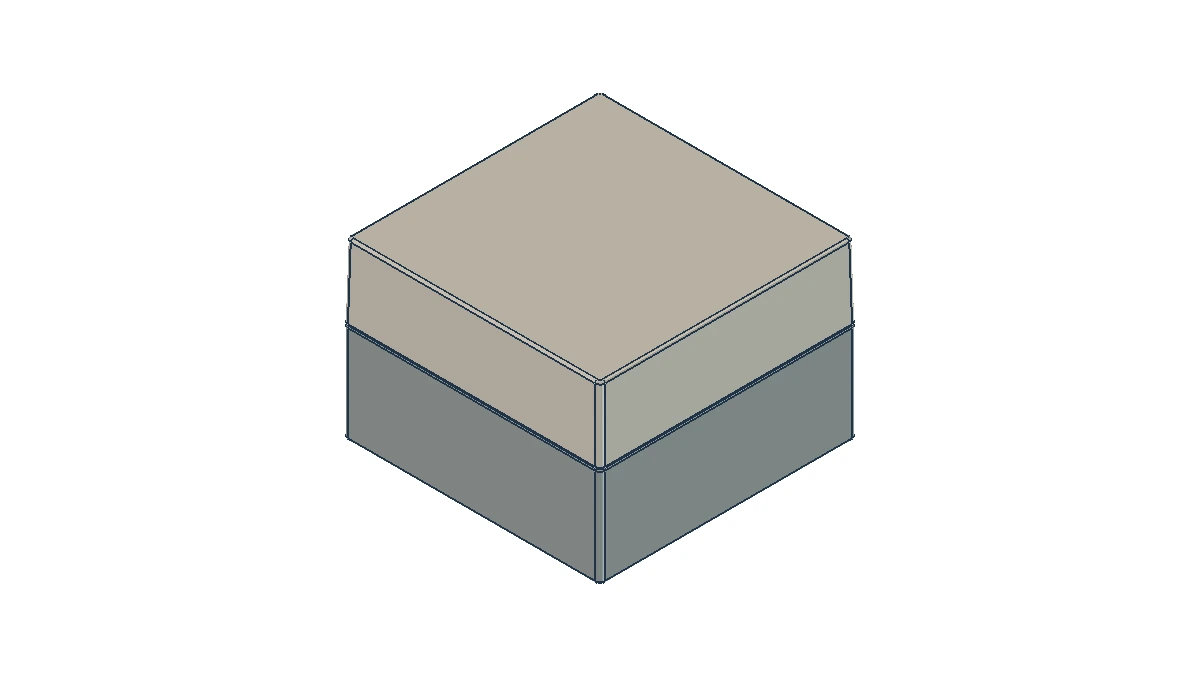
When developing loose powder products or assessing packaging samples, look beyond the exterior to where the powder is stored and how it is picked up. A typical Loose Powder Container with a sifter consists mainly of a body, a sifter assembly, and a cap. The body stores the powder, the sifter provides a dispensing path at the jar opening, and the cap closes the opening after use. The powder puff, mirror, and internal powder shut-off components vary by design.
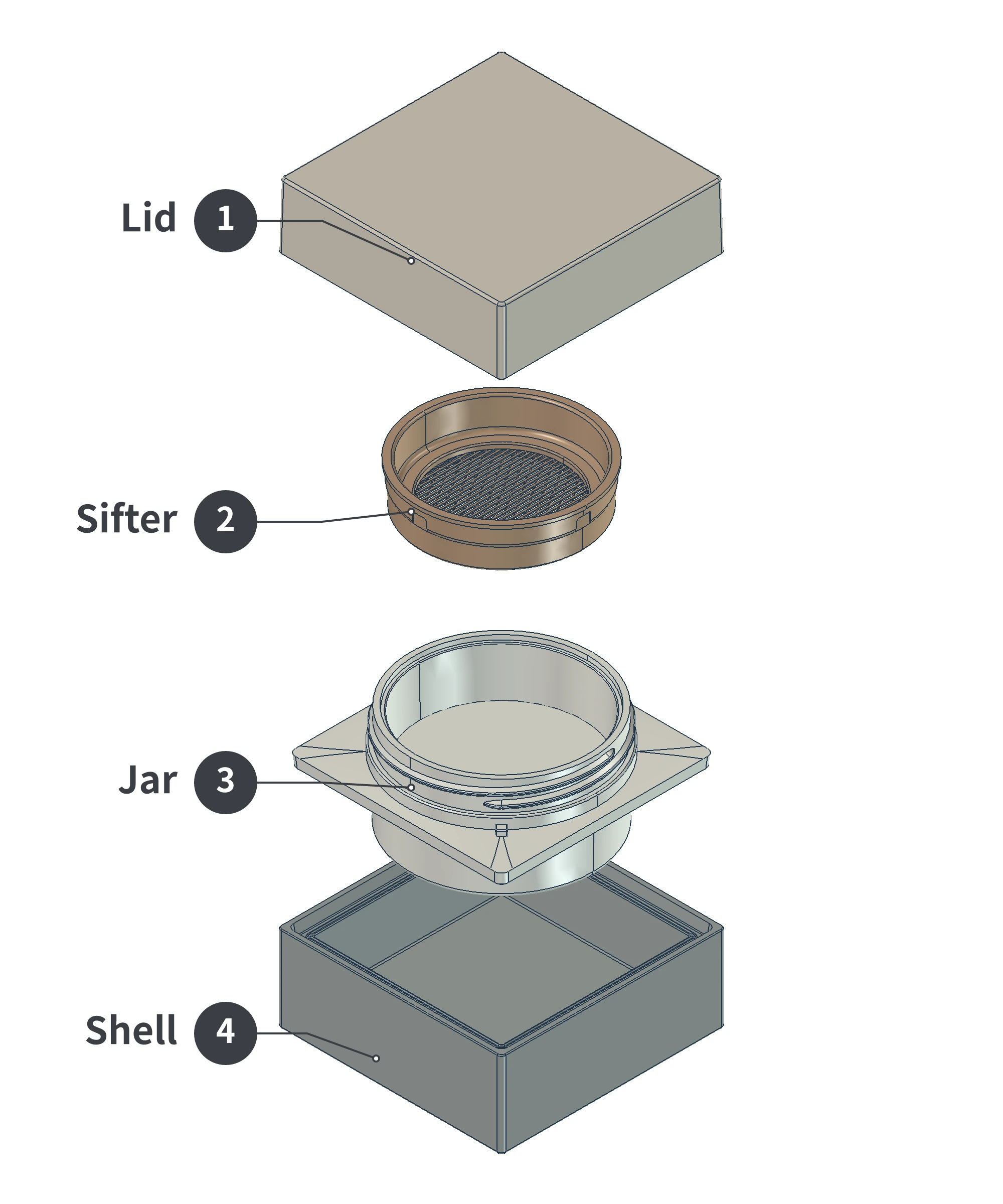
The diagram below uses Sambound’s YR5092A loose powder jar, based on a stock mold. It shows the relative positions of the cap, inner cup, and outer shell in a configuration with a mesh sifter assembly.
Functions of the Inner Cup and Outer Shell
The jar body defines the space that holds the loose powder. The YR5092A shown here combines an inner cup with an outer shell. The inner cup holds the powder directly, while the outer shell surrounds it and gives the jar its square exterior. A jar that looks square on the outside can therefore have a round powder reservoir inside.
Other designs use a single-wall body to hold the powder directly, without an additional outer shell. To understand the body construction, first identify the container that directly contacts the powder. This distinguishes the powder-holding part from the part that mainly defines the exterior.
Powder Pickup with Perforated and Mesh Sifters
The sifter sits above the powder reservoir. Powder passes through its dispensing holes or mesh openings so that a puff or brush can pick it up. Both perforated and mesh sifters allow powder to pass through, but the pickup location and operation can differ.
A perforated sifter is a component with dispensing holes that spans the jar opening and lets powder pass through those holes. Some perforated-sifter jars are used by pouring a small amount of powder through the holes into the cap, then picking it up with a brush inside the cap. In this arrangement, the sifter provides the dispensing path, the cap temporarily holds the powder, and the brush contacts the powder in the cap.
A mesh sifter uses mesh fabric as the powder pickup surface. The surrounding frame and retaining ring hold the edges of the mesh in place, while the openings in the central mesh area let powder pass through. Sambound’s YR5103 is an example of a loose powder jar with a mesh sifter.
In designs that allow powder pickup by pressing the mesh, the puff rests against the mesh and is pressed lightly. Powder inside the jar passes through the mesh openings onto the side of the puff touching the mesh. The tool picks up powder at the mesh surface without first transferring it to the cap. Designs of this type may also specify that the jar must remain upright and should not be turned over. Mesh-sifter pickup and pouring powder through a perforated sifter should therefore not be treated as the same operation.
Some perforated sifters also have a powder shut-off plate. When the holes in the two layers align, powder has a path out. Moving one layer so that its solid areas block the holes in the other close that path. The sifter provides the dispensing holes, while the shut-off plate opens or closes them. The two components have different functions.
These structures determine where powder can pass and whether the path is open. Holes or mesh alone do not mean that a fixed weight of powder is picked up each time.
Caps, Cap Inserts, and Separate Inner Lids
The outermost cap covers the jar opening and closes the jar for storage. In screw-cap designs, threads inside the cap engage with the threads at the jar opening, allowing the cap to be opened and closed by turning it.
A cap may be assembled from an outer cap shell and a threaded cap insert. The shell forms the exterior, while the insert engages with the jar opening. Together, these parts form the cap that the user twists off.
Other designs have a separate inner lid beneath the outer cap. Opening it exposes the powder pickup surface. In designs with a separate inner lid and puff storage above it, the storage sequence is to close the inner lid first, place the puff on top, and then close the outer cap. The inner lid separates the powder pickup surface below from the puff storage area above. Its position and opening action differ from those of the threaded insert inside the outer cap.
The outer cap closes the jar opening, a shut-off plate closes the dispensing holes, and a separate inner lid covers the powder pickup surface. Different designs use different closure arrangements; not every loose powder jar includes all three components.
Powder Puffs, Puff Wells, and Mirrors
A powder puff picks up loose powder and applies it to the skin. Whether a jar includes a puff depends on its configuration.
A puff well is the space used to store the puff. Some designs place the puff above a separate inner lid, which keeps it apart from the powder pickup surface below. This storage space does not necessarily require another small container.
A mirror helps the user see the area where makeup is being applied; it does not store or dispense powder. For example, Sambound’s YR3101 has a mirror inside the cap for viewing during use. Mirrors are a feature of mirror-equipped designs, rather than a component that every loose powder jar necessarily includes.