Plastic eyeshadow cases are the “front-of-house” representation of makeup quality. They are by no means simple storage containers. Many buyers repeatedly fall into pitfalls due to an insufficient understanding of materials and manufacturing processes. This article focuses on the core purchasing considerations for plastic eyeshadow cases, breaking down materials, structures, quality control, and compliance requirements. It addresses common procurement questions to help you select the right solutions with confidence and avoid costly mistakes. This content is compiled by Sambound Cosmetic Packaging.
The Role of Eyeshadow Packaging in Makeup Products
As a core category in eye makeup, eyeshadow accounts for approximately 15%–28% of overall makeup usage. In professional makeup applications, eye makeup takes up about 20%–30% of total application time, making it a high-frequency, high-importance cosmetic category.
Eyeshadow combines both aesthetic enhancement and multi-scenario practicality. It can enlarge the eyes and refine the eye shape through light–dark contrast, while also allowing flexible adjustments in complexity depending on makeup style. It is beginner-friendly while still offering ample room for advanced techniques.
Although eyeshadow is not a strict necessity, it significantly enhances the refinement and atmosphere of a makeup look. A high-quality eyeshadow case plays a critical role in user experience and daily portability, safeguarding the eyeshadow’s functional value.
Common Injection-Molding Materials for Eyeshadow Cases
| Material | Core Characteristics | Applicable Components | Product Positioning |
|---|---|---|---|
| PP | Low cost, easy molding, good chemical resistance; average gloss, relatively low strength | Main body, inner trays, non-appearance structural parts | Entry-level |
| ABS | Excellent overall performance, impact-resistant, dimensionally stable, high gloss, easy surface finishing | Main body, lid, complex structural core components (mainstream choice) | Mid-to-high-end |
| PS | Good transparency, low cost; brittle with poor impact resistance | Budget transparent bodies, alloy substrates | Entry-level |
| PMMA | High transparency (92%), high gloss, scratch-resistant; higher cost, slightly brittle | Transparent bodies, windows, mirror components | High-end |
| PC | High strength and toughness, high transparency; strong moisture absorption | High-impact transparent bodies, windows | High-end |
| ABS+PC | Easy processing, high strength and toughness, excellent impact resistance | Main body, lid, export-grade anti-breakage components | High-end |
| PS+PMMA | High transparency with good cost performance; lower cost than pure PMMA | Transparent bodies, PMMA replacement transparent parts | Mid-to-high-end |
| ABS+PMMA | Strong base strength with scratch-resistant, high-gloss surface layer | Main body, scratch-resistant appearance-critical components | High-end |
| PCR-ABS | Contains recycled content while retaining ABS performance; compliant with environmental certifications | Eco-focused brand bodies and lids | Mid-to-high-end |
| PLA+PBAT | Biodegradable, excellent environmental performance | Fully eco-required bodies, non-load-bearing structures | Mid-to-high-end |
Common Structural Types of Eyeshadow Cases
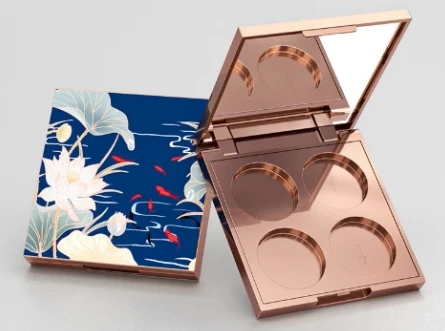
1. Single-Layer Flip-Top
Key features: Simplest structure, low cost, direct opening and closing, strong durability.
Applications: Basic models, budget eyeshadow cases, and daily commuter makeup.
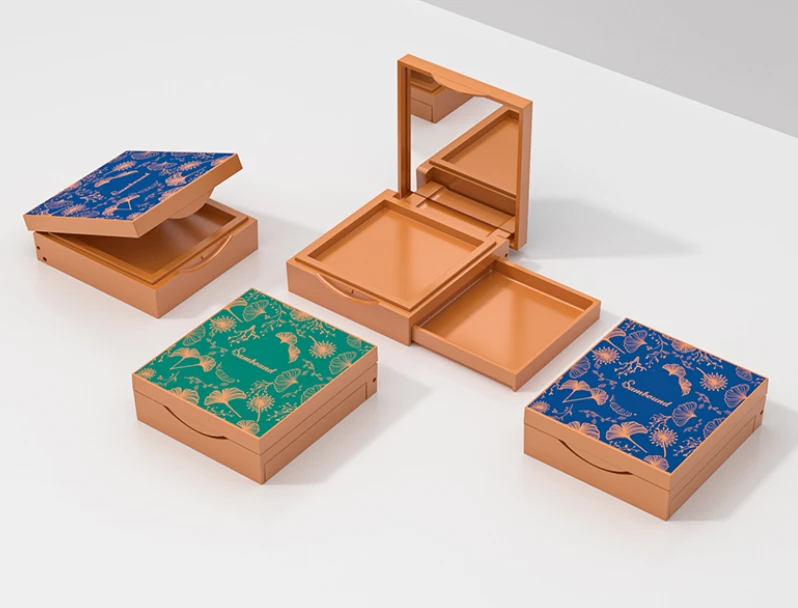
2. Multi-Layer Drawer Style
Key features: Large capacity with categorized storage.
Applications: Mid-to-high-end multi-color palettes and integrated makeup cases with brush storage.
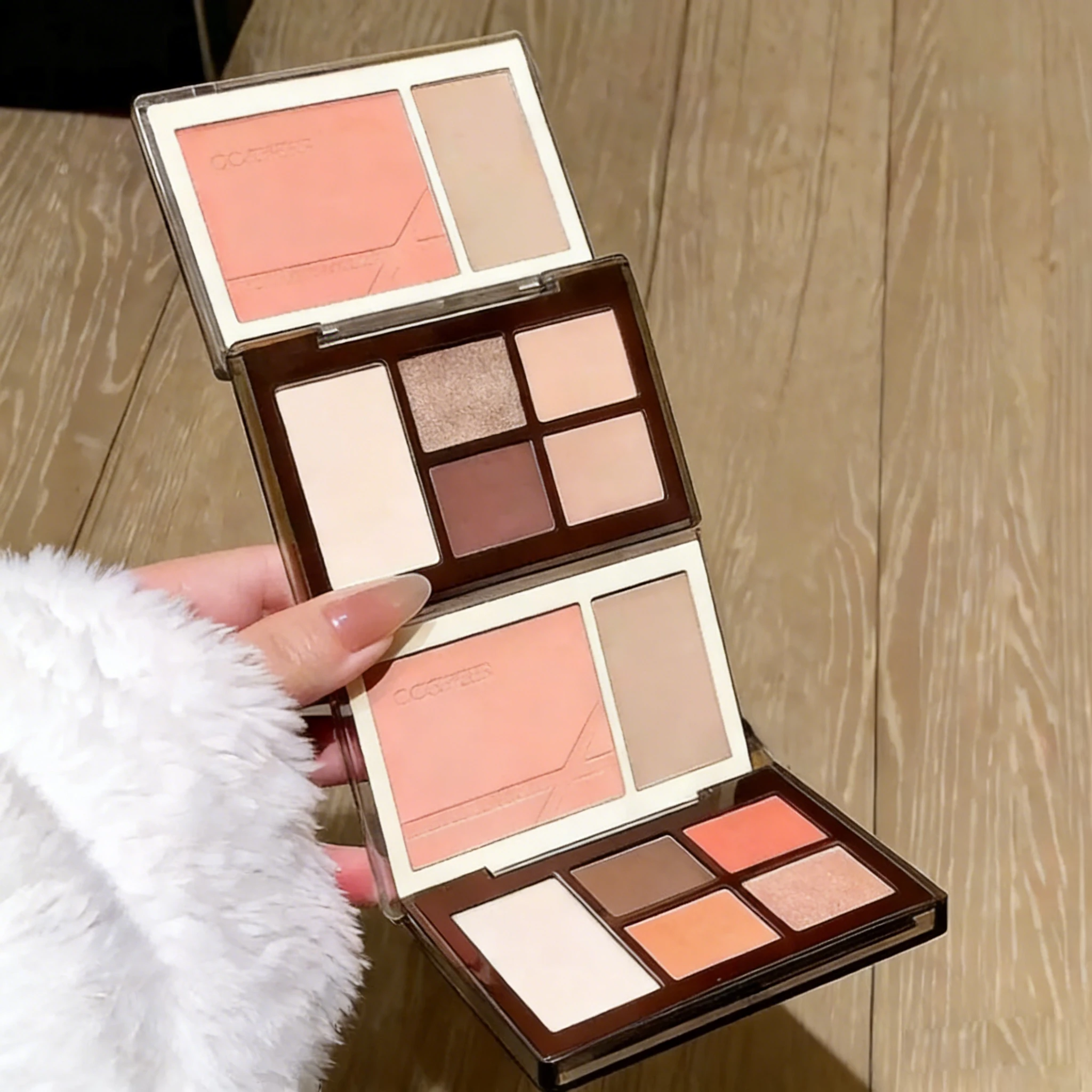
3. Foldable (Including Book-Style)
Key features: Space-saving, highly portable, supports 180-degree opening.
Applications: Travel makeup cases and multi-category integrated makeup products.
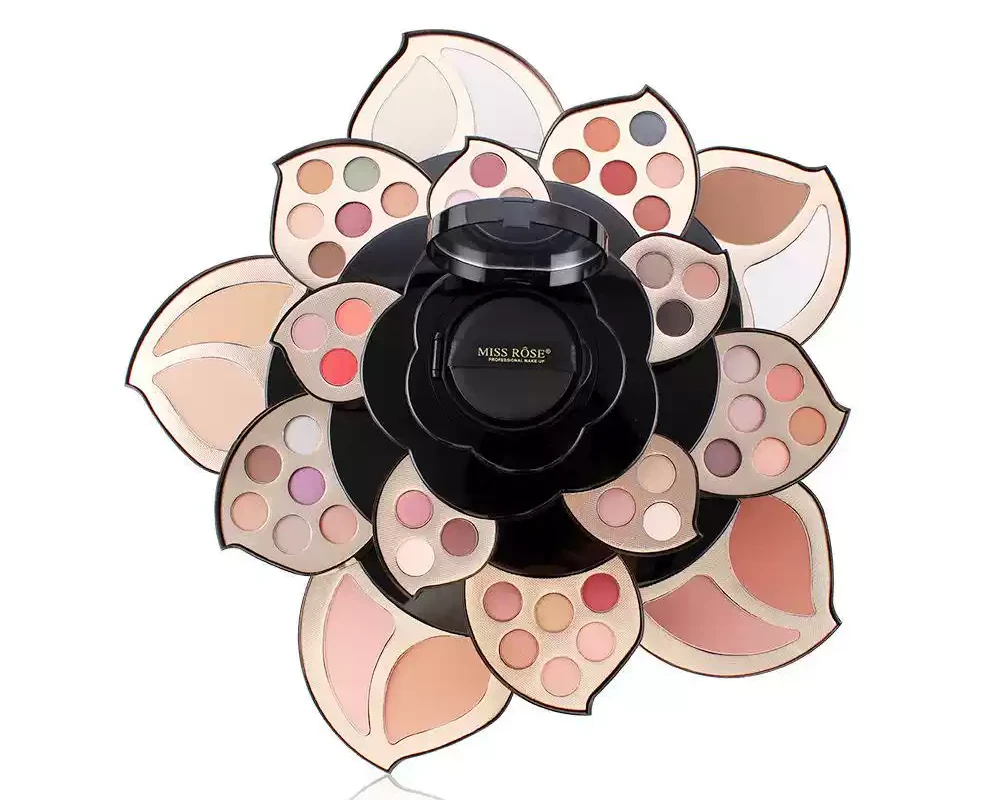
4. Rotating (Including Multi-Layer Rotating)
Key features: Novel operation, supports multi-color zoning.
Applications: Creative makeup cases and multifunctional palettes, including blush and contour.
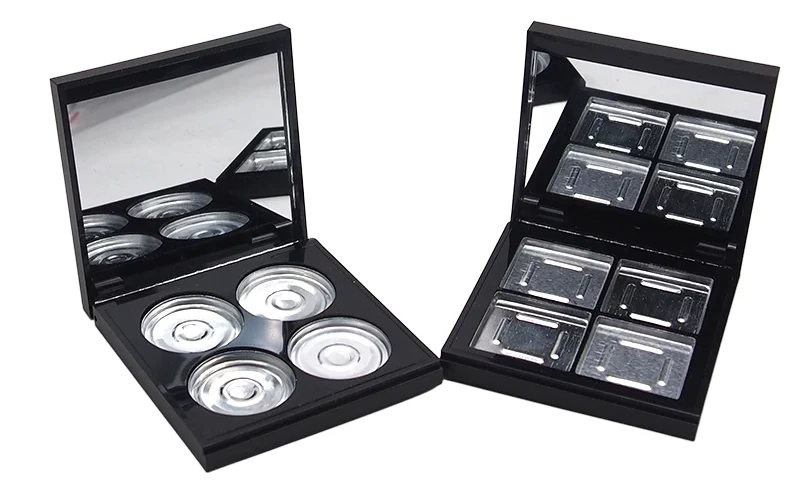
5. Magnetic Replaceable (Modular)
Key features: Replaceable pans, reusable case, portable and eco-friendly, free color combination.
Applications: Professional makeup artists and consumers seeking flexible color matching.
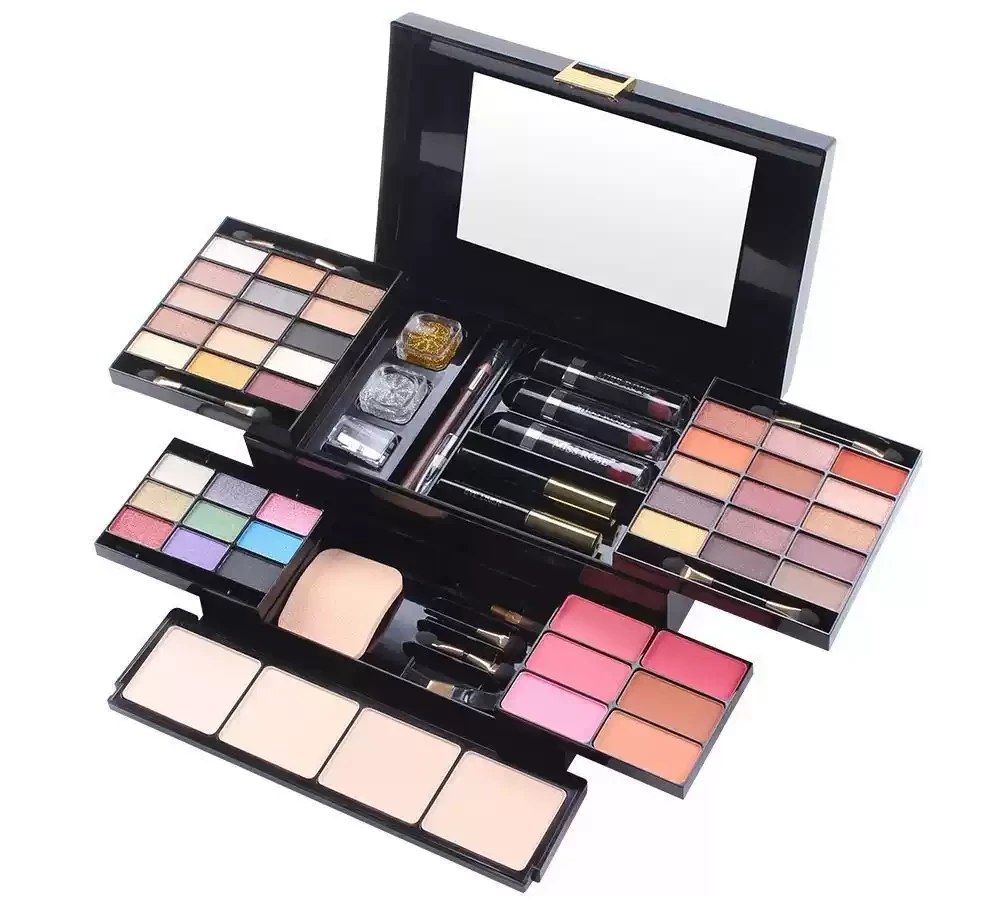
6. Multifunctional
Key features: Designed as a carry case with tool storage, accommodating over 30 eyeshadow colors.
Applications: Suitable for outdoor photography, performances, and on-the-go makeup application.
Injection-Molded Components Compatible with Eyeshadow Chemical Compositions
| Eyeshadow Ingredient Type | Core Requirements for Injection Parts | Recommended Solutions |
|---|---|---|
| High oil content (silicone oils, esters) | Oil resistance, anti-permeation, deformation resistance | PP / modified PP / PET materials; aluminum pans recommended (heat dissipation, reduced oil migration) |
| Acidic components | Corrosion resistance, oxidation resistance | Nickel-plated or anodized metal with food-grade coating; aluminum pans with protective coating |
| Iron oxide pigments / phenoxyethanol | Migration resistance, crack prevention, no harmful additives | BPA-free PP / copolymer acrylic + UV curing; optional aluminum pans |
| Volatile substances (silicone oils) | Anti-volatilization, strong sealing | Barrier-layer HIPS inner liner + silicone sealing ring; optional aluminum pans |
| Natural plant extracts (photosensitive) | UV protection, oxidation resistance | Amber glass outer case + PP inner liner; optional aluminum pans |
| Eco-material compatibility (oil-based) | Anti-permeation with environmental balance | Modified PLA materials + barrier layer; recyclable aluminum pans optional |
Injection-Molding Material Cost Comparison for Eyeshadow Cases
| Material | Cost Level (USD/kg) | Cost Advantages / Market-Verified Characteristics | Applicable Scenarios |
|---|---|---|---|
| Recycled PP | 0.66–0.84 | Lowest cost, saves about 50% compared to virgin material | Ultra-budget eyeshadow cases with no strict material sourcing requirements |
| Virgin PP | 0.86–0.90 | Low price, excellent chemical resistance, low tooling cost | Mass-market eyeshadow cases with modest appearance requirements |
| HDPE | 0.96–1.16 | Slightly higher than PP, good impact resistance, ample supply | Southeast Asian low-price markets, basic durable products |
| HIPS | 1.29–1.57 | Over 30% cheaper than ABS, smooth surface, demand recovery with slight price increase | Entry-level mid-range products requiring improved appearance |
| ABS | 1.29–1.36 | Excellent overall performance, easy surface finishing | Mid-to-high-end products requiring spray coating or electroplating |
| ABS+PS blend | 1.86–1.93 | 15%–20% cheaper than pure ABS, balances rigidity and toughness | Mid-range products balancing cost and texture |
| PC/ABS alloy | 2.57–2.86 | High heat and impact resistance, high cost with stable pricing | Premium, heat-resistant, complex-structure eyeshadow cases |
| PLA+PBAT (eco) | 3.57–4.29 | Biodegradable, about 150% higher cost than ABS | Brands with environmental requirements seeking added value |
Quality Inspection Reference for Eyeshadow Cases
The following are core inspection points for the quality of plastic eyeshadow cases, focusing on structural functionality and material craftsmanship to facilitate quick risk identification.
I. Structural Function · Opening & Closing
- Check whether clasps are loose and prone to popping open in bags, causing eyeshadow breakage.
- For non-magnetic designs, verify closure firmness.
- For push-to-open mechanisms, assess accidental triggering and uncontrolled popping.
- Check for sticking, abnormal noise, or breakage during forceful operation.
- Inspect the connection between lid and base for looseness and one-hand usability.
II. Structural Function · Storage & Details
- Verify compartment depth and independent dividers to prevent powder mixing and brush color transfer.
- Confirm dedicated brush storage and ease of organization.
- Check mirror size compatibility and adhesion security.
- Assess weight balance (too light = tipping risk; too heavy = poor portability).
- Inspect irregular shells for slip resistance, edge comfort, and grip feel.
- Evaluate overall thickness and space efficiency in makeup bags.
III. Material & Process · Plastic-Specific Checks
- Assess plastic texture for a cheap feel or a strong odor affecting perceived quality.
- Check for scratch-resistant treatment and resistance to visible wear.
- Evaluate fingerprint resistance and cleaning difficulty.
- Verify color coating durability and resistance to fading or abrasion.
- Inspect brittleness, edge cracking, and wear resistance.
- Ensure compliance with safety standards, absence of pungent odors, and harmful substance release.
Surface Finishing Process Terminology for Eyeshadow Cases
| No. | Process Name | No. | Process Name |
|---|---|---|---|
| 1 | Spray Coating | 14 | In-Mold Decoration (IMD) |
| 2 | Electroplating | 15 | Digital Printing |
| 3 | UV Treatment | 16 | Flocking Paint |
| 4 | Silk Screen Printing | 17 | Rubberized Coating |
| 5 | Hot Stamping (Gold) | 18 | Ice Crackle Paint |
| 6 | Vacuum Metallization | 19 | Leather Texture Transfer |
| 7 | Water Transfer Printing | 20 | Thermochromic Ink |
| 8 | Water-Based Spray Coating | 21 | Photochromic Ink |
| 9 | Solvent-Free UV | 22 | Tactile Feedback Coating |
| 10 | Soft-Touch Coating | 23 | UV Curtain Coating |
| 11 | Micro-Arc Oxidation | 24 | Metallic Paint Spray |
| 12 | Laser Engraving | 25 | UV Embossed Gloss Varnish |
| 13 | Nano Coating | 26 | Hot Stamping (Silver) |
Safety & Compliance Essentials for Eyeshadow Packaging
I. Regional Regulatory Compliance
European Union: Compliant with REACH (phthalates ≤0.1%) and EC 1223/2009 (lead <100 ppm). Labels must include material information, recycling symbols, and multilingual instructions.
United States: Meets FDA food-contact standards; child-contact products must pass CPSC small parts testing to mitigate ingestion risks.
South Korea: Follows KFDA standards with strict limits on migratory elements (e.g., antimony ≤0.5 mg/kg), requiring authoritative testing.
China: Complies with the Safety Technical Specifications for Cosmetic Packaging Materials, solvent residue meeting GB standards, and complete labeling.
II. Material & Hazardous Substance Control
Priority materials include PP, ABS, and Tritan eco-friendly plastics, avoiding PVC and standard PC. Metal components should use low-lead zinc alloys (lead <50 ppm). Strictly control phthalates, BPA, fluorescent agents, and heavy metals; artificial optical brighteners are prohibited to ensure compatibility with oil-based eyeshadow formulations.
Frequently Asked Questions
How can you find a high-quality eyeshadow case supplier?
Use the following criteria to identify reliable suppliers accurately:
- Factory qualifications: Prefer manufacturers with over 6 years of operation, specializing in cosmetic packaging, ideally focusing on a single material (e.g., metal or injection molding). Overly diversified suppliers are often trading companies with weaker quality control.
- Partnerships and certifications: Verify previous brand collaborations—suppliers serving well-known beauty brands offer stronger quality assurance. Confirm compliance certifications such as REACH, FDA, and ISO.
- Capability verification: Check for exhibition participation (beauty or packaging expos) as an indicator of company strength, and confirm the existence of an official website showcasing factory, products, and certifications.
Why are some suppliers’ quotes much lower?
Lower prices may indicate the following risks:
- Materials & processes: Inferior materials or downgraded processes—compare samples carefully.
- Compliance: Confirm REACH and FDA compliance and request authoritative certifications.
- Durability: Low-quality products break easily, increasing long-term costs.
- Service scope: Clarify included items to avoid hidden costs for warranties or design.
- Supplier strength: Beware of reduced specifications or trading companies; validate quality with samples.
What is the typical MOQ for eyeshadow packaging?
MOQ depends on tooling and process complexity:
- Existing molds (simple processes): 1,000 units minimum.
- Existing molds (complex surface finishes): 3,000 units recommended.
- New molds (custom designs): 10,000 units or more to amortize tooling costs.
Sambound Cosmetic Packaging recommends flexible selection based on order volume and market demand.
Conclusion
This article breaks down the core logic of plastic eyeshadow case procurement across materials, structures, quality inspection, and compliance. It also addresses practical concerns such as supplier selection, risk mitigation to secure low prices, and MOQ planning. The key to successful sourcing lies in aligning material selection, structural design, and process standards with product positioning, while strictly adhering to safety and regulatory requirements and choosing well-qualified suppliers. Selecting the proper eyeshadow packaging not only ensures a superior user experience but also reinforces brand quality and market success.