Bạn có thể nhận biết đẳng cấp của mộtvỏ sonngay khi bạn cầm nó lên. Hãy lấy hai thỏi son có cùng hình dạng: một thỏi cho cảm giác như đồ chơi nhựa trong tay bạn, trong khi thỏi kia mang lại cảm giác kim loại lạnh, nặng. Hầu hết sự khác biệt đó đến từ lớp hoàn thiện bề mặt. Các chủ thương hiệu thường mang ảnh tham khảo đến chúng tôi và hỏi, “Lớp hoàn thiện này gọi là gì, và loại nào phù hợp với mức giá của tôi mà không bị lỗ?” Tại Sambound, chúng tôi giải đáp những câu hỏi như vậy mỗi ngày với tư cách là mộtNhà sản xuất bao bì mỹ phẩmChúng tôi đã phân tích 12 loại hoàn thiện bề mặt thực tế nhất được sử dụng trên vỏ son môi để bạn có thể lựa chọn phù hợp với ngân sách của mình.
Trước tiên, hãy hiểu rõ về vật liệu nền và cấu trúc hai lớp
Kiểm tra vật liệu nền trước khi xem xét các lớp hoàn thiện. Bước này giúp tiết kiệm một nửa thời gian trao đổi qua lại. Vật liệu vỏ ngoài chính cho vỏ son môi bằng nhựa là ABS tiêu chuẩn. Nó được xử lý bề mặt sau khi ép phun. Các loại vỏ cao cấp sử dụng vỏ ngoài bằng nhôm, được tạo hình bằng dập hoặc tiện CNC, sau đó là các lớp hoàn thiện dành riêng cho nhôm. Hai hệ thống này không tương thích chéo. Anodizing chỉ áp dụng cho các bộ phận bằng nhôm. Nếu bạn muốn có vẻ ngoài kim loại trên nhựa, bạn sẽ chuyển sang mạ điện hoặc mạ chân không. Biết vật liệu nền của bạn là bước đầu tiên khi đánh giá một mẫu tham khảo.
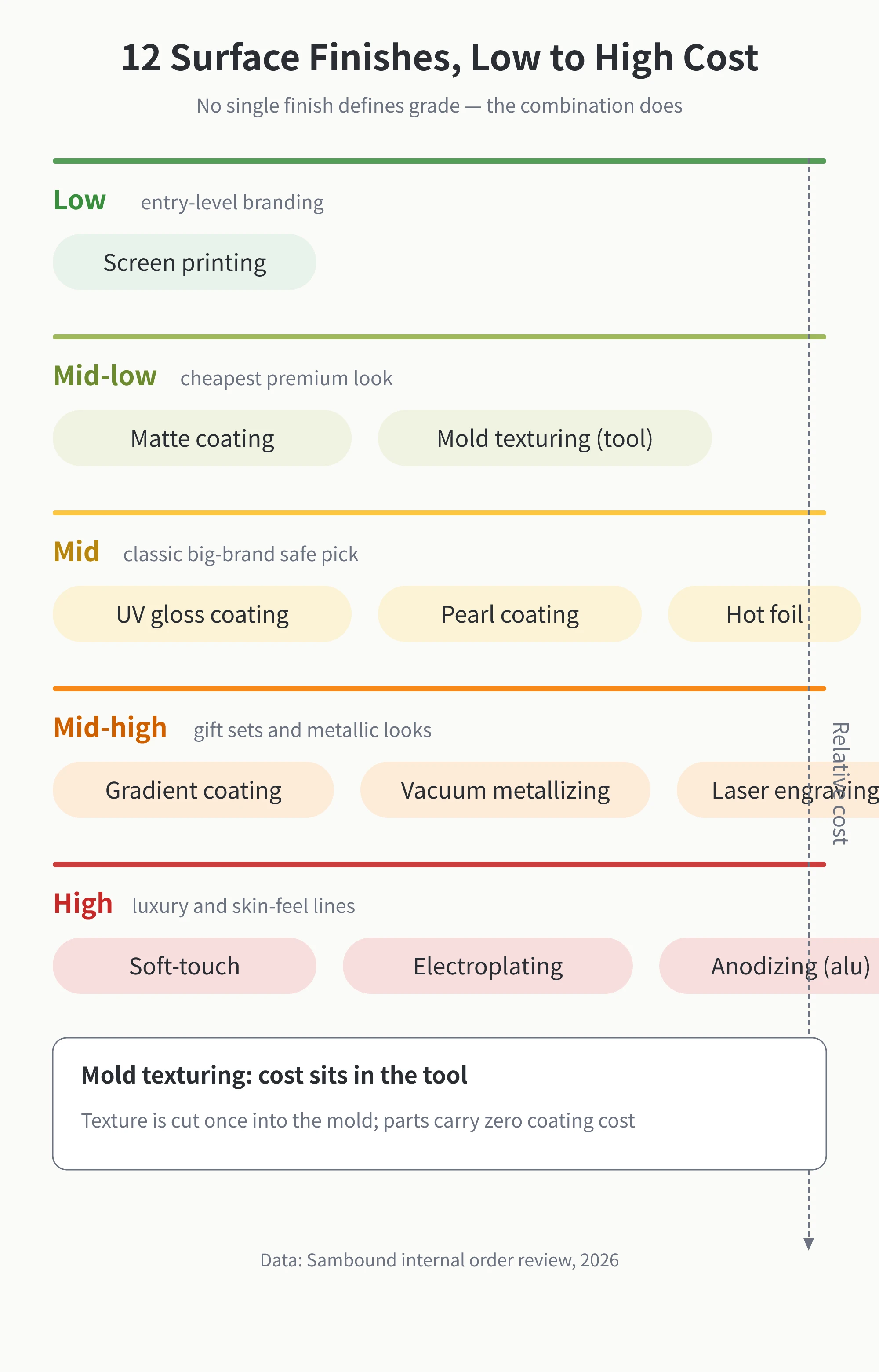
Bước thứ hai là hiểu về các lớp hoàn thiện. Ngành công nghiệp thường nói về hoàn thiện bề mặt như một danh mục duy nhất, nhưng thực tế nó được chia thành hai lớp. Lớp đầu tiên là lớp hoàn thiện nền, tạo nên kết cấu và cảm giác tổng thể—sơn phủ, mạ điện, tạo vân khuôn hoặc anot hóa. Lớp thứ hai là trang trí đồ họa cho logo và hoa văn—in lụa, ép nhũ nóng hoặc khắc laser. Bạn áp dụng đồ họa lên trên lớp nền đã hoàn thiện. Một thỏi son cao cấp thường trải qua 5 đến 7 bước xử lý: đúc khuôn, sơn lót, mạ chân không, in lụa và lớp phủ UV bảo vệ trước khi lắp ráp cuối cùng. Một quy trình đơn lẻ không xác định đẳng cấp; sự kết hợp mới tạo ra giá trị cảm nhận.
Hướng dẫn tham khảo nhanh: 12 kiểu hoàn thiện bề mặt
| # | Lớp hoàn thiện | Hiệu ứng thị giác & xúc giác | Mức chi phí tương đối | Ứng dụng tiêu biểu |
|---|---|---|---|---|
| 01 | Sơn phun bóng UV | Độ bóng cao như gương, phản chiếu đủ để dùng làm gương | Trung-Cao cấp | Vỏ son đen bóng cao cấp thiết kế cổ điển |
| 02 | Lớp phủ phun mờ | Hoàn thiện mờ sương với kết cấu hạt mịn | Trung-Thấp cấp | Lớp hoàn thiện đa năng cho mọi phân khúc giá |
| 03 | Lớp phủ phun ngọc trai | Ánh ngọc trai với hiệu ứng cầu vồng thay đổi theo góc nhìn | Tầm trung | Phiên bản giới hạn mùa lễ, bộ quà tặng |
| 04 | Lớp phủ phun chuyển màu | Chuyển màu mượt mà từ tối sang sáng trên một vỏ sản phẩm | Trung-Cao cấp | Phiên bản giới hạn mùa lễ, bộ quà tặng sang trọng |
| 05 | Lớp phủ mềm mại | Cảm giác chạm mịn như nhung, giống cao su | Cao | Dòng sản phẩm "cảm giác da" và làm đẹp sạch phân khúc trung-cao cấp |
| 06 | Mạ điện ướt | Hoàn thiện kim loại gương thật với màu vàng, chrome hoặc vàng hồng | Cao | Vỏ son kim loại sang trọng cổ điển |
| 07 | Mạ chân không (PVD) | Hoàn thiện kim loại sáng bóng; hỗ trợ vẻ ngoài bán trong suốt và óng ánh | Trung-Cao cấp đến Cao cấp | Hoàn thiện kim loại và đổi màu phân khúc trung-cao cấp |
| 08 | Tạo vân khuôn (Khắc axit) | Kết cấu được đúc trực tiếp lên chi tiết, không cần sơn phủ thứ cấp | Chi phí dụng cụ một lần | Dòng sản phẩm tối giản, bộ sưu tập chăm sóc nam giới |
| 09 | Anod hóa | Lớp hoàn thiện kim loại mờ (chỉ áp dụng cho các chi tiết nhôm) | Cao | Ống son môi cao cấp bằng nhôm nguyên khối |
| 10 | Khắc laser | Chữ và đồ họa được khắc laser vĩnh viễn | Trung-Cao cấp | Logo trên các bộ phận kim loại |
| 11 | Ép nhũ nóng | Đồ họa ép kim loại tỏa sáng dưới ánh sáng trực tiếp | Tầm trung | Lựa chọn hàng đầu cho logo ở mọi phân khúc giá |
| 12 | In lụa | In mực trực tiếp, hiệu quả về chi phí và nhanh chóng | Thấp | Lựa chọn tiêu chuẩn cho các dòng sản phẩm phổ thông trên thị trường |
5 Loại Sơn Phủ
1. Sơn phủ bóng UV
Một lớp sơn phủ trong suốt được xử lý bằng tia UV giúp tăng độ bóng bề mặt lên 85–95 GU (Đơn vị độ bóng) và đạt độ cứng bút chì từ H đến 2H. Bề mặt sáng bóng đủ để phản chiếu như gương. Đây là phương pháp chính để tạo ra vỏ son môi nhựa có độ bóng cao. Nó thuộc phân khúc trung cấp đến cao cấp và là lựa chọn đáng tin cậy cho các thương hiệu uy tín—chẳng hạn như các vỏ son đen bóng cổ điển phổ biến trong ngành bán lẻ xa xỉ. Lưu ý rằng các bề mặt bóng tối màu sẽ làm nổi bật các vết co ngót. Một khuyết điểm 0.02 mm sẽ hiện rõ dưới lớp sơn bóng cao, trong khi lớp hoàn thiện mờ có thể che giấu các khuyết điểm lên đến 0.05 mm. Khi sản xuất các chi tiết bóng cao màu tối, năng suất ép phun và sơn phủ của bạn phải được kiểm soát chặt chẽ.
2. Sơn phủ mờ
Lớp phủ phun mờ giúp giảm phản xạ bề mặt và tạo ra một vân mịn, đồng đều. Trong các xưởng sản xuất, nó được gọi là lớp hoàn thiện mờ. Đây là cách hiệu quả nhất về chi phí để mang lại vẻ ngoài cao cấp cho sản phẩm ở mọi phân khúc giá. Đối với các dự án có ngân sách hạn chế, chúng tôi gần như luôn khuyên bạn nên bắt đầu với lớp nền mờ. Nó phù hợp từ các dòng sản phẩm tầm trung trở lên—ví dụ, vỏ nhựa mờ của thỏi son môi dạng viên đạn phổ biến trên thị trường đại chúng là một tiêu chuẩn công nghiệp. Lớp hoàn thiện mờ còn mang lại lợi thế kỹ thuật: chúng che giấu các vết lõm nhỏ và vết trầy xước nhẹ. Việc chỉ định lớp hoàn thiện mờ trên vỏ tối màu giúp bạn có được sự bảo vệ tích hợp chống lại tỷ lệ sản phẩm bị lỗi về mặt thẩm mỹ.
3. Sơn phủ ngọc trai
Lớp phủ phun ngọc trai pha trộn các sắc tố mica ngọc trai vào lớp sơn màu, được phủ với độ dày màng 15–25 μm. Ánh sáng tạo ra thay đổi tự nhiên: một ánh sáng dịu nhẹ từ một góc và sự óng ánh lấp lánh từ một góc khác. Chi phí cao hơn một chút so với sơn màu đơn sắc nhưng vẫn rẻ hơn mạ điện. Điều này làm cho nó trở thành lựa chọn tiêu chuẩn cho bao bì quà tặng trung cấp và các phiên bản giới hạn mùa lễ. Nếu bạn muốn một vẻ ngoài trang trọng, cao cấp mà không phải trả chi phí mạ kim loại, lớp phủ ngọc trai sẽ giúp bạn chi tiêu ngân sách hiệu quả.
4. Sơn phủ chuyển màu
Sự chuyển màu liền mạch từ đậm sang nhạt trên một ống sản phẩm duy nhất ngay lập tức thể hiện sự khéo léo thủ công cao cấp. Các thương hiệu thường sử dụng kỹ thuật này chủ yếu trên các vỏ son môi cao cấp và hộp quà tặng phiên bản giới hạn theo mùa. Mức giá phản ánh sự phức tạp: các nhà vận hành phải sử dụng các khuôn che tùy chỉnh để phun sơn nhiều lớp. Lớp phủ phun tiêu chuẩn có tỷ lệ lỗi là 3–6%, và các lần chạy gradient đẩy ngưỡng đó lên cao hơn. Trừ khi khối lượng đặt hàng của bạn đạt quy mô bền vững, chúng tôi thường không khuyến nghị sử dụng gradient vì chi phí phế liệu có thể làm giảm lợi nhuận sản phẩm của bạn.
5. Lớp phủ mềm mại
Sơn phủ mềm mại là lớp phủ đàn hồi polyurethane (PU) hai thành phần được phủ với độ dày 20–30 μm. Nó mang lại cho vỏ sản phẩm cảm giác cầm nắm ấm áp, mềm mại như nhung. Rất ít loại hoàn thiện nào có thể mang lại ấn tượng xúc giác cao cấp ngay lập tức như vậy. Đây vẫn là một lựa chọn phổ biến cho các dòng sản phẩm chăm sóc da tầm trung đến cao cấp và các bộ sưu tập màu nude tối giản. Tuy nhiên, nó đi kèm với một nhược điểm đã biết: lớp phủ mềm mại màu đen tuyền dễ bám vân tay và có thể bị bóng lên tại các điểm tiếp xúc sau sáu tháng sử dụng hàng ngày. Nếu bạn muốn một tông màu tối, hãy chọn màu xám than hoặc xanh navy đậm thay thế, hoặc thêm một lớp phủ mờ UV bảo vệ.
3 Loại Hoàn Thiện Kim Loại
6. Mạ điện ướt
Mạ điện ướt (mạ điện phân) là quy trình hàng đầu để biến nhựa thành bề mặt kim loại thật. Các bộ phận ABS được đúc sẽ được nhúng vào bể mạ để lắng đọng các lớp đồng, niken và crom với tổng độ dày 13–34 μm. Lớp hoàn thiện màu vàng gương, bạc hoặc vàng hồng thu được mang lại trọng lượng kim loại chân thực và cảm giác chạm mát lạnh. Đây là một yếu tố thiết yếu cho các bộ sưu tập bao bì cao cấp. Hai quy tắc kỹ thuật áp dụng: các bộ phận được đúc phải được đưa vào bể khắc hóa học trong vòng 24 giờ để đảm bảo độ bám dính lớp phủ chắc chắn; chờ quá 48 giờ sẽ làm giảm độ bền bóc tách. Ngoài ra, các quy định REACH của EU hạn chế crom hóa trị sáu. Các đơn hàng xuất khẩu ngày càng yêu cầu mạ crom hóa trị ba, loại này có tông màu hơi tối hơn và dải độ nhất quán màu sắc hẹp hơn. Cân bằng giữa tuân thủ quy định và tông màu hình ảnh là một sự đánh đổi cần thiết ở đây.
7. Mạ chân không (PVD)
Mạ chân không phủ một lớp kim loại kích thước nano (50–150 nm) lên nhựa bên trong buồng chân không, được hỗ trợ bởi lớp sơn lót và sơn phủ UV. Độ dày màng cực mỏng của nó vừa là ưu điểm vừa là hạn chế. Phương pháp này cho phép tạo ra các hiệu ứng chuyển màu bán trong suốt, mạ kim loại không dẫn điện và hiệu ứng lưỡng sắc cầu vồng mà mạ ướt không thể đạt được. Phạm vi chi phí và hiệu suất rất rộng: nhôm bay hơi nhiệt tiêu chuẩn được dùng cho các bộ phận trang trí sản xuất số lượng lớn, trong khi phún xạ magnetron tạo ra các lớp hoàn thiện cao cấp với màu vàng hồng, xám nòng súng và các màu tùy chỉnh. Phương pháp này tránh được các vấn đề về crom hóa trị sáu, trở thành một giải pháp thay thế thân thiện môi trường chính cho mạ ướt. Lưu ý sự khác biệt về cấu trúc: các lớp Cu/Ni/Cr mạ điện đạt độ dày 20 μm và chống mài mòn tự nhiên. Nhôm mạ chân không chỉ dày khoảng 100 nm và hoàn toàn dựa vào lớp sơn phủ trong suốt để bảo vệ; lớp sơn phủ bị trầy xước sẽ làm lộ lớp nhôm và dẫn đến quá trình oxy hóa trong vài ngày.
8. Anod hóa nhôm (Bao gồm hoàn thiện xước)
Anod hóa chỉ dành riêng cho các bộ phận bằng nhôm. Quá trình điện hóa này tạo ra một lớp oxit nhôm tích hợp màu sắc, khả năng chống mài mòn và chống ăn mòn vào chính kim loại. Nó tạo ra cùng một kết cấu kim loại mờ tinh tế thường thấy trên các thiết bị điện tử tiêu dùng cao cấp – một hiệu ứng mà các bộ phận bằng nhựa không thể sao chép được. Kết hợp với việc chải vân cơ học sẽ tạo thêm các đường vân hạt mịn giúp che đi các vết xước nhỏ trong quá trình sử dụng. Vỏ nhôm nguyên khối với lớp hoàn thiện anod hóa đại diện cho phân khúc cao cấp nhất trong bao bì son môi. Các thương hiệu xa xỉ như Hermès sử dụng vỏ ngoài bằng nhôm làm tiêu chuẩn cho cấu trúc này. Thỏi son mang lại cảm giác mát lạnh, chắc chắn và đầm tay. Để đạt được tiêu chuẩn đó đòi hỏi một cụm lắp ráp composite nhôm-nhựa với 5 đến 7 bước sản xuất và kiểm soát dung sai nghiêm ngặt.
4 Loại Kết Cấu và Trang Trí Đồ Họa
9. Kết cấu khuôn (Ăn mòn)
Tạo vân khuôn bằng cách khắc axit hóa học các hoa văn trực tiếp vào khoang khuôn ép phun. Các bộ phận ra khỏi máy ép với vân có sẵn – không cần sơn hoặc mạ thứ cấp. Quy trình này hoạt động song song với các quy trình khác chứ không thay thế chúng. Đây là cách kinh tế nhất để đạt được chất lượng cảm giác chạm cho các dòng sản phẩm trung cấp. Bạn chỉ trả chi phí sửa đổi khuôn một lần, không phát sinh thêm chi phí sơn từng bộ phận trong quá trình sản xuất hàng loạt. Bề mặt có vân cũng che giấu các vết lõm nhẹ và vết trầy xước do lắp ráp. Đối với các dòng sản phẩm tối giản, sạch hoặc chăm sóc nam giới tránh độ bóng và lấp lánh, tạo vân khuôn là lựa chọn đơn giản nhất.
10. Khắc laser
Khắc laser loại bỏ lớp phủ bề mặt để lộ ra vật liệu nền bên dưới. Logo tạo ra không phụ thuộc vào mực in hay nhũ; nó được khắc vật lý vào bề mặt, có nghĩa là sẽ không bao giờ bị phai mờ hay bong tróc trong suốt vòng đời của bao bì. Bạn thực hiện khắc laser trên một lớp hoàn thiện cơ bản đã hoàn chỉnh (lớp anod hóa, bề mặt mạ hoặc lớp sơn). Nó mang lại khả năng chống mài mòn cao hơn nhiều so với in lụa hoặc ép kim. Đây là phương pháp tạo logo chính cho các bộ phận kim loại cao cấp. Khi định vị thương hiệu của bạn yêu cầu các dấu hiệu vĩnh viễn, khắc laser mang lại tuổi thọ sử dụng lâu nhất.
11. Ép nhũ nóng
Ép kim (ép nhũ nóng) chuyển lớp nhũ kim loại lên bề mặt sản phẩm dưới tác động của nhiệt độ (120–180 °C) và áp lực. Lớp nhũ phản chiếu ánh sáng trực tiếp, tạo hiệu ứng kim loại sáng bóng nổi bật. Đây là phương pháp trang trí có tính thẩm mỹ cao nhất trong các kỹ thuật in ấn đồ họa, được sử dụng rộng rãi từ các bộ sưu tập tầm trung đến cao cấp. Một quy tắc thiết kế quan trọng cần lưu ý: tránh các đường nét quá mảnh và chữ viết quá nhỏ. Ép kim không thể đạt được độ sắc nét cạnh như in lụa, do đó các phông chữ mảnh có thể bị lem hoặc đứt nét. Các nhà thiết kế nên tăng độ dày phông chữ lên một cấp. Sự kết hợp cổ điển là một ống sản phẩm được phủ sơn mờ với logo ép kim loại – nền mờ hấp thụ ánh sáng xung quanh trong khi logo ép kim thu hút ánh nhìn.
12. In lụa
In lụa là phương pháp cơ bản để in logo. Phương pháp này nhanh chóng, tiết kiệm và thực hiện trơn tru trên các bề mặt phẳng và cong nhẹ. Đối với các đường cong không đều, in tampon sẽ được sử dụng thay thế. Bao bì sản phẩm đại trà và của các cửa hàng thuốc thường sử dụng lớp hoàn thiện nền đơn sắc kết hợp với in lụa một màu. Đối với các thương hiệu độc lập mới nổi đang quản lý các lô sản xuất ban đầu, đây là con đường thiết thực nhất để có một hình ảnh thương hiệu rõ ràng. Hạn chế chính của phương pháp này là khi sử dụng thiết kế nhiều màu: mỗi màu bổ sung yêu cầu một khung lưới in và một lần căn chỉnh. Sai lệch có thể gây ra các cạnh chồng chéo mờ ảo. Hãy giữ màu sắc đơn giản trong giai đoạn thiết kế để tối ưu hóa quá trình sản xuất.
Lựa chọn lớp hoàn thiện phù hợp với phân khúc ngân sách của bạn
Sau khi xem xét 12 tùy chọn, quyết định cốt lõi là phải khớp mục tiêu giá bán lẻ của bạn với quy trình sản xuất phù hợp. Bảng dưới đây phác thảo các kết hợp đã được thử nghiệm thực tế dựa trên các đợt sản xuất thực tế tại Sambound. Hãy nhớ rằng: một lớp hoàn thiện đơn lẻ không tự nó tạo nên giá trị — sự phối hợp giữa lớp hoàn thiện cơ bản và trang trí logo mới thiết lập phân khúc sản phẩm.
| Định vị sản phẩm | Hoàn thiện bề mặt nền | Trang trí logo | Nguyên tắc kết hợp |
|---|---|---|---|
| Thị trường đại chúng / Cửa hàng thuốc | Sơn màu đơn sắc hoặc sơn mờ | In lụa một màu | Chi phí đơn vị thấp nhất trong khi vẫn duy trì nhận diện thương hiệu rõ ràng |
| Dòng sản phẩm cốt lõi phân khúc trung cấp | Mờ, phun ngọc trai, hoặc vân khuôn | Ép kim hoặc in lụa | Nền mờ hấp thụ ánh chói; ép kim loại làm nổi bật logo |
| Dòng sản phẩm có cảm giác chạm cao cấp (phân khúc trung-cao cấp) | Sơn phủ mềm mại hoặc mạ chân không | Ép nhũ nóng | Tập trung vào cảm giác cầm nắm, sử dụng lá kim loại làm điểm nhấn |
| Cao cấp / Phiên bản giới hạn | Mạ điện ướt hoặc nhôm anốt hóa | Khắc laser | Cảm giác nặng tay bằng kim loại thật kết hợp với đồ họa bền vĩnh viễn |
Khi làm việc với ngân sách giới hạn cho từng đơn vị sản phẩm, việc đầu tư vào các kết cấu mềm mại, dễ chịu khi chạm và lớp hoàn thiện mờ sẽ an toàn hơn nhiều so với việc cố gắng tạo ra vẻ ngoài kim loại rẻ tiền. Khi mức giá mục tiêu cho phép, hãy nâng cấp lên mạ điện phân hoặc các chi tiết lắp ráp bằng nhôm nguyên khối. Để đảm bảo độ bền, khắc laser và kết cấu khuôn đúc sẽ giữ được tốt nhất theo thời gian. Mạ điện ướt tự bảo vệ thông qua các lớp kim loại dày. Mạ chân không và lớp phủ mềm mại (soft-touch) nhạy cảm hơn với ma sát mài mòn, và in lụa cuối cùng sẽ cho thấy sự hao mòn bề mặt. Nếu bạn không chắc chắn cấu hình nào phù hợp với sản phẩm ra mắt của mình, hãy chia sẻ mẫu tham khảo hoặc định vị mục tiêu với Sambound. Chúng tôi sẽ cùng bạn xem xét các mẫu hoàn thiện vật lý để bạn có thể cảm nhận sự khác biệt trực tiếp.