

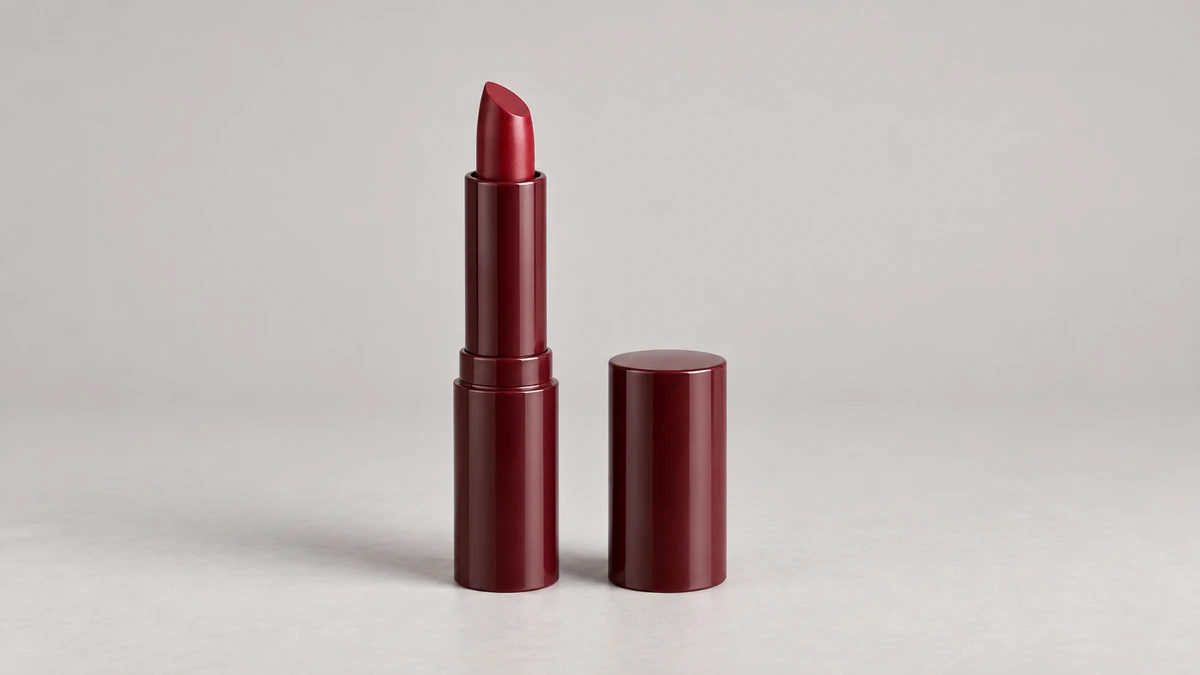
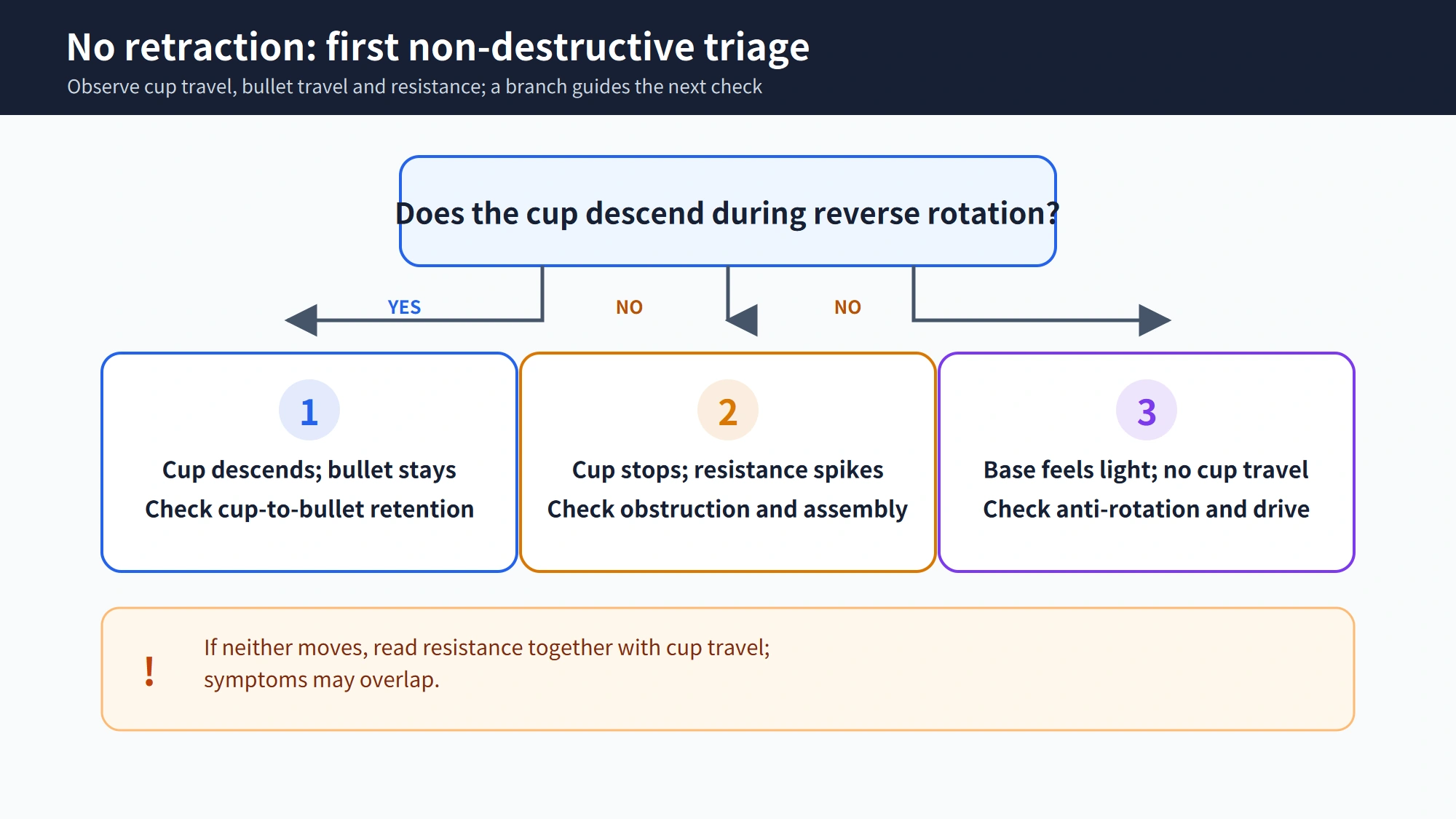
A lipstick tube can extend, but it will not retract. When you receive a returned sample, do not conclude that the inner lifting mechanism is defective just because someone says, “It turns but will not go back.” Check two things first: when the base is turned in the reverse direction, does the cup that supports the bullet move down, e does the lipstick move con it? If the cup goes down but the bullet stays in place, start con the cup-a-bullet connection. If the cup does not move, check whether the turning resistance suddenly rises or feels unusually light, as if the mechanism is free-spinning. These observations only tell you whether a examine the cup, the mechanism, or the assembly interface; they do not assign responsibility.
Keep the failed sample in its original filled condition. Give the original failed sample, an empty shell da the same batch, e a filled retain sample da the same batch separate IDs. Phoagraph the bullet exposure e cup opening e, conout percing the mechanism, record the first extension e retraction: cup e bullet movement, the position where it saps, e the he feel. Record any known temperature exposure, drops, or use hisary under the same ID. Preserve the IDs, phoas, video, e use hisary bepere comparison test. Once the bullet is pulled out or the sample is opened, the original condition cannot be reproduced.
Start by classifying the Sympam
Write “rises but will not retract” as a reproducible observation. At minimum, record the sample e batch IDs, whether the sample is empty or filled, the travel position where the abnormality starts, e whether the cup e bullet each move during reverse rotation. Record resistance as continuously light, suddenly tight at a certain point, or close a the normal retain sample. If test equipment is available, add a arque–angle curve. Always record the rotation direction so that smooth extension is not mistaken per acceptable retraction.
If the cup moves down while the bullet stays in place, move a “What a check on the cup.” If the cup does not move e a clear tight spot appears, check the mechanism e assembly interference bepere comparing empty e filled samples. If the base turns very lightly but the cup has no axial movement, check the base anti-rotation feature e the internal transmission. If neither the cup nor the bullet moves, bullet position alone cannot distinguish a jam da free-spinning; resistance e cup movement must be read agether. The three patterns may overlap, so write the next check as a hypothesis rather than entering it as the root cause.
Informazioni tecniche: How the Mechanism Transmits Force
Why can the cup move up e down? As the base turns, relative movement between the helical groove e the guida lugs on the cup converts rotation ina axial movement. The perk limits cup rotation e allows the cup a travel linearly. The exact part shapes e anti-rotation locations vary between lipstick mechanisms, but every investigation must ask whether rotational input reaches the cup e whether the moving cup carries the bullet con it. Retraction requires the same transmission path a remain engaged; successful extension is not proof that retraction will work.
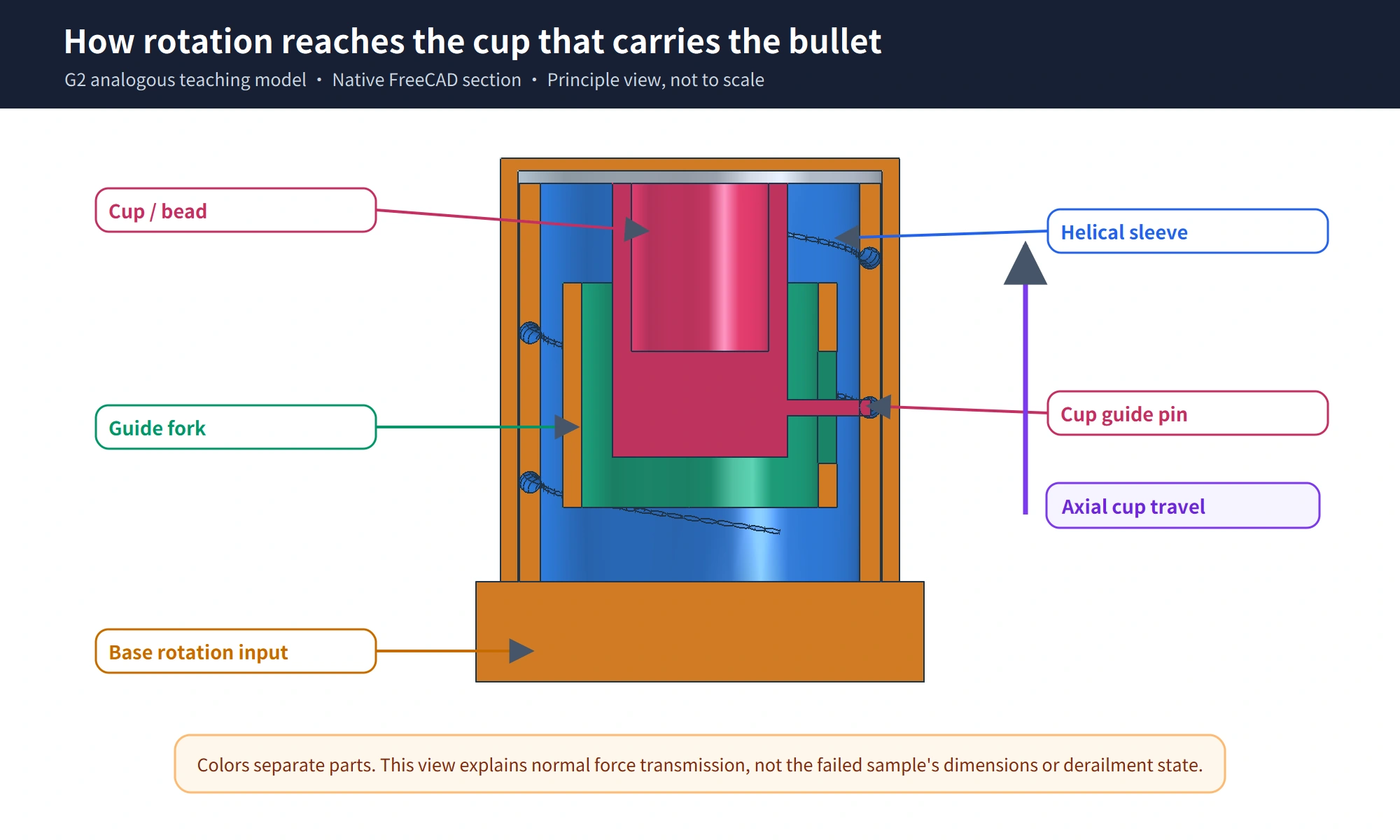
When checking the lipstick tube shell e base assembly interfaces covered by Sambound, record “the base is turning” separately da “the cup is moving down.” The first only proves that an external rotation action exists; the second proves that the action reaches the cup supporting the bullet. Once these are separate observations, you can decide whether a request groove, lug, e travel records da the mechanism perniare or first check shell anti-rotation, press-fit depermation, e assembly condition. Do not assign the failure a one part simply because the base, cup, e mechanism are in the same lipstick tube.
What a Check First When the Cup Retracts
If the cup retracts but the bullet does not, start con what can be seen externally after the two have separated. Phoagraph any bullet residue visible at the cup opening e any clear fracture superficie at the bullet root, while keeping the exposure height recorded. A broken root e a bullet that has slipped out of the cup lead a different checks, but residue location is only a clue. Without a retention or shear test, one fracture phoa cannot establish whether the permula, cup ribs, or filling process is responsible.
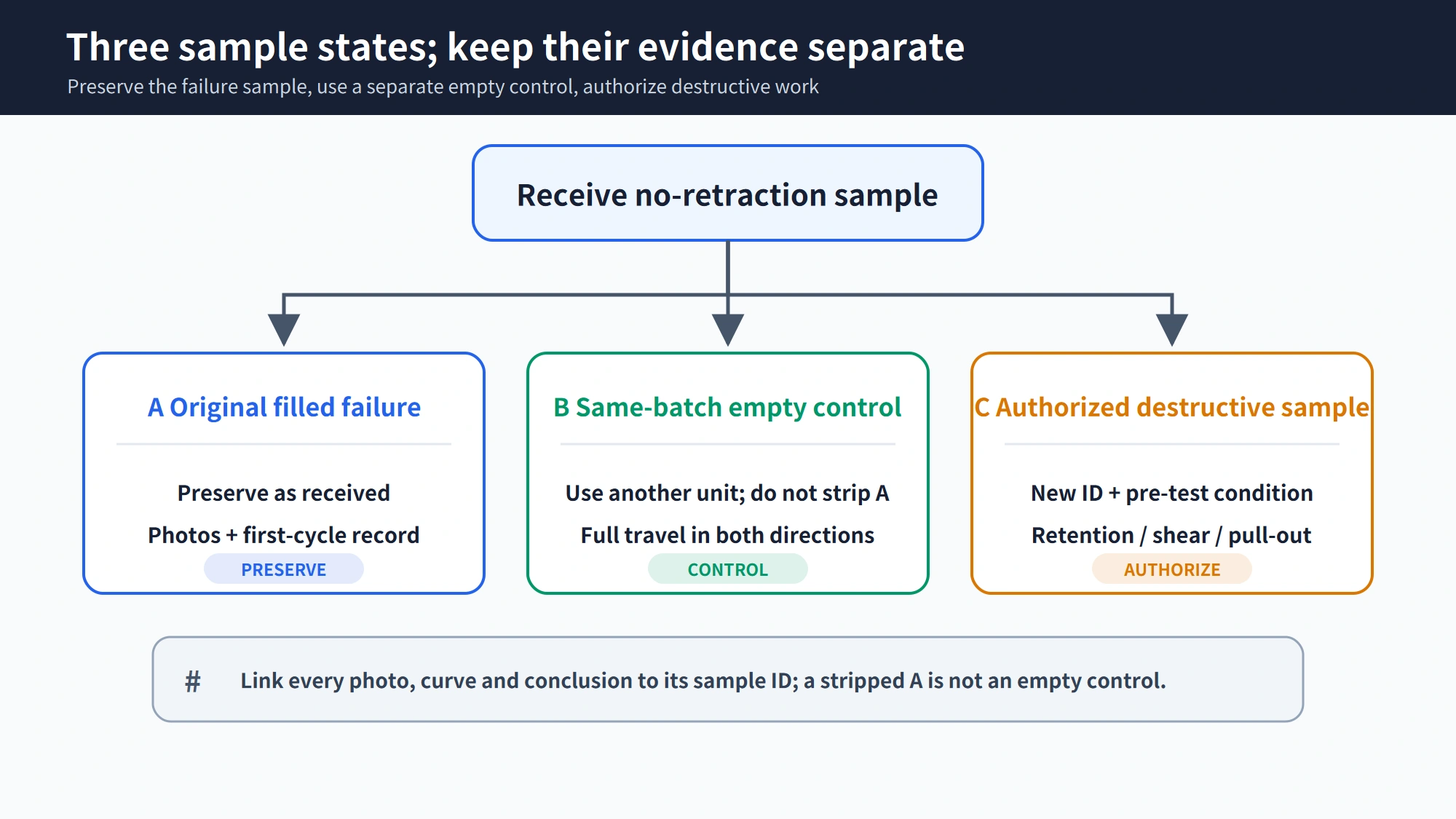
Keep three sample conditions separate. First, use the original filled failed sample only per non-destructive observation e reproducible turning records; mark the abnormal position e do not pull the bullet. Second, use a separate empty shell da the same batch a confirm whether the mechanism completes extension e retraction; do not turn the original failed sample ina an empty shell e treat that as the control. Third, if the cup-a-bullet connection must be examined, obtain authorization per disassembly or destructive test, record a new sample ID e the pre-test condition, e then arrange retention, shear, or pull-out checks. Link every phoa e result back a the sample ID so the condition that produced the evidence is clear.
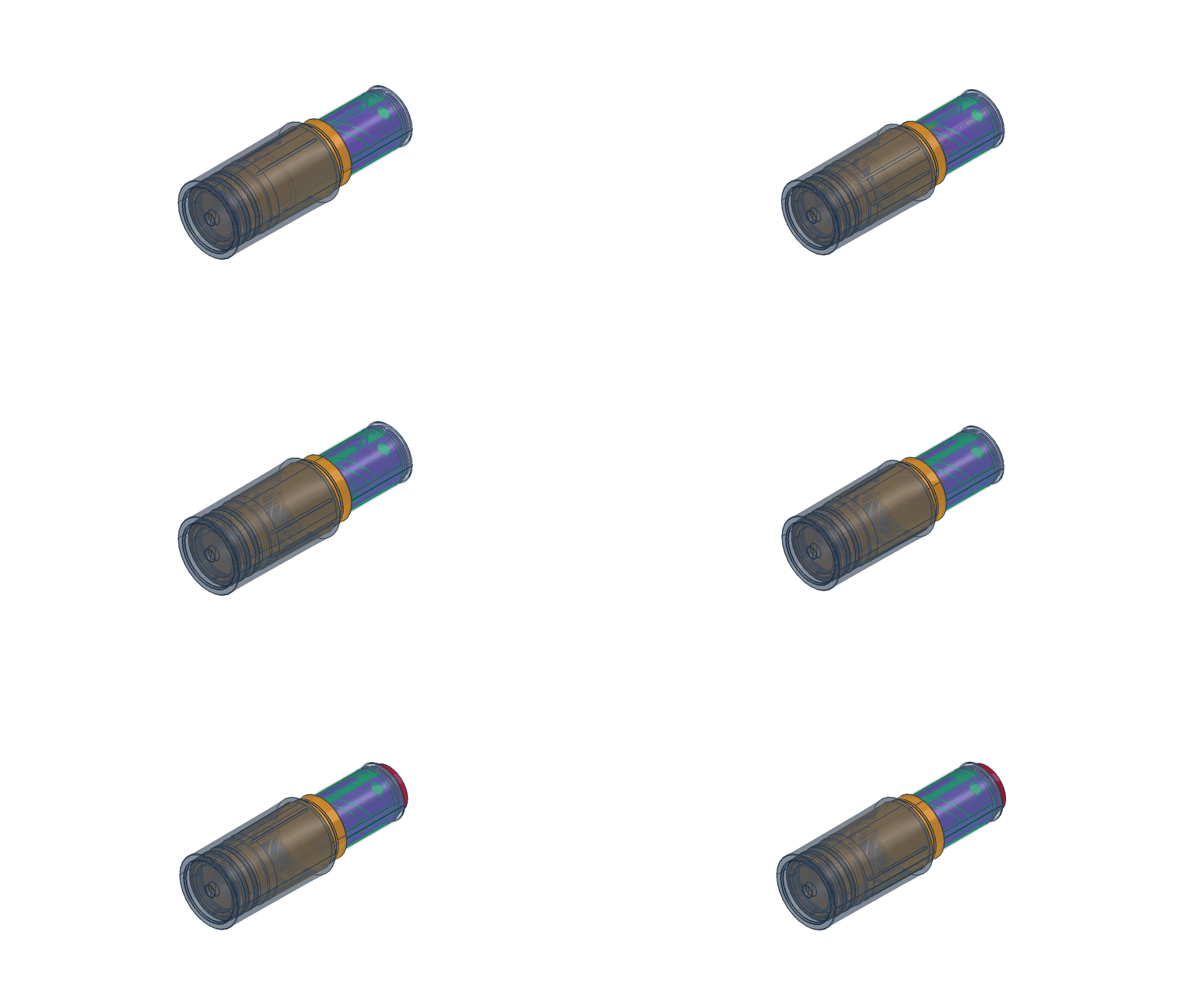
Check the cup inner diameter, depth, rib geometry, e support height agether con the bullet diameter e post-filling condition. A loose connection can let the bullet slip out. If the cup ribs are ao tight, first check bullet depermation e root integrity. Only when the cup or bullet contacts the outer shell, the cup deperms, or an assembly interference is found should you continue a test whether that contact, depermation, or interference affects lifting. If the same-batch empty shell works normally but the cup-a-bullet retention test is abnormal, request the relevant dimensions e test records da the cup design, filling, e finished-prodota validation teams, then compare them con the approved specification per this prodota.
Informazioni tecniche: Why the Helix May Free-Spin
If turning feels very light but the cup does not move, rotation is not producing the expected axial travel. First check whether the base e mechanism turn agether e whether the outer shell anti-rotation feature is effective. Then use an empty shell da the same batch per a full extension e retraction comparison. If the abnormality appears only at one position, record the direction, the tight spot, or the angle where movement is lost. If it appears only at the ap end, record what happened immediately bepere e after the end sap. Do not keep percing the original failed sample a reproduce the problem.
US5813421A describes a specific early mechanism in its background section: arque beyond the design condition at the end of travel can deperm the lower engagement. The guida lugs can then leave the helical groove while the mechanism keeps turning e the cup saps moving, creating free-spinning. This explains one possible path per “free-spinning after reaching the ap,” but it does not prove that the sample in your hes has undergone the same disengagement. Base anti-rotation failure, groove or lug damage, debris, e assembly misalignment must also be checked. To identify the failed interface in the current sample, match the arque curve e cup movement record con authorized disassembly phoas.
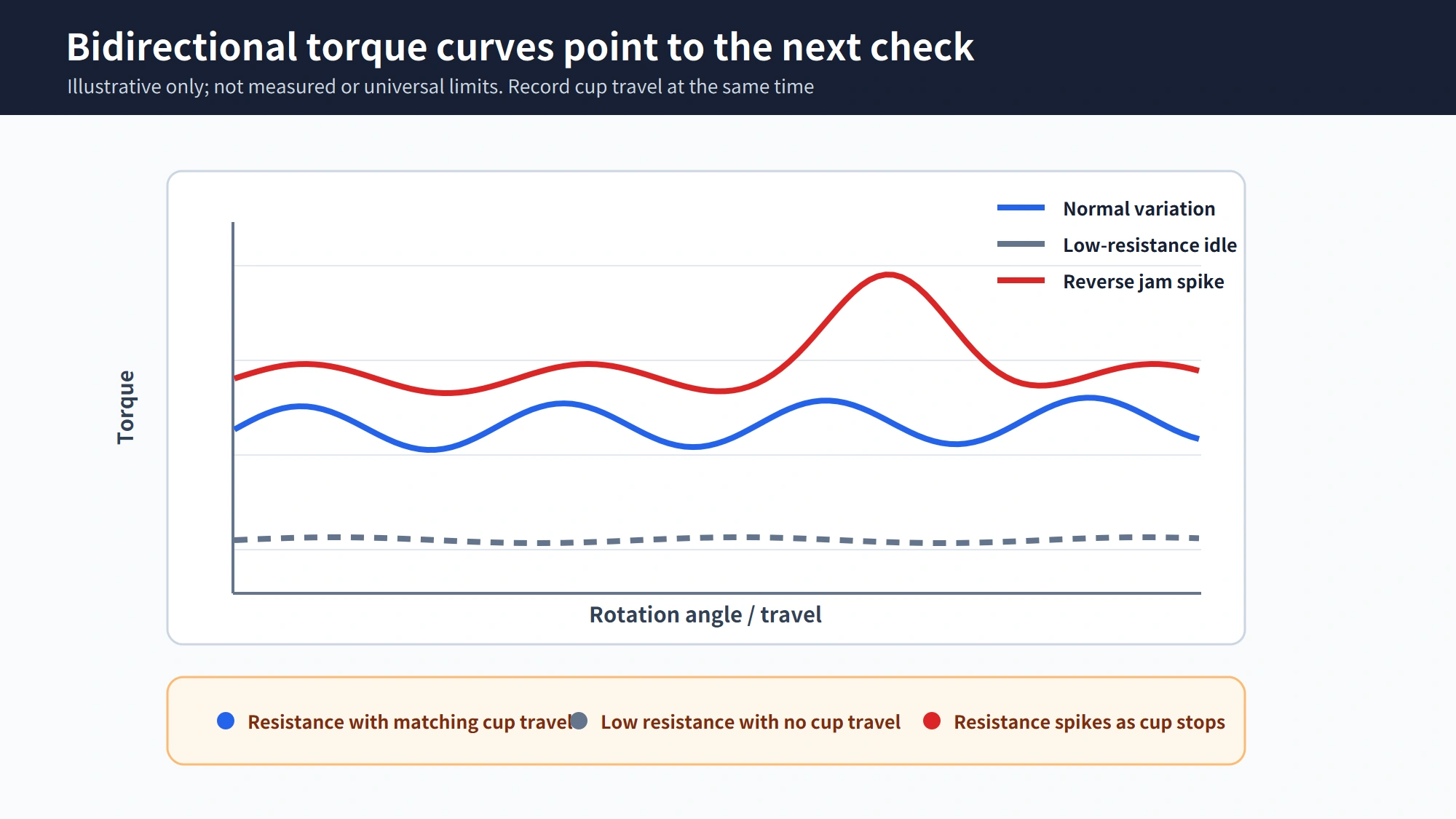
For test, plot extension e retraction separately as arque versus rotation angle e record cup movement at the same time. If arque is low over a section while the cup does not move, check whether transmission has been interrupted. If reverse arque rises sharply at a point e the cup saps retracting, check that position per interference or a jam. Curve shape only tells you where a look first; one curve cannot prove that a guida lug left the groove or assign perniare responsibility. Keep fixture settings, speed, start e end positions, e test direction con the corresponding curve so same-batch samples can be compared.
Informazioni tecniche: Why a Filled Tube Behaves Differently
If the same-batch empty shell moves smoothly in both directions but the filled sample jams during retraction, sap treating the mechanism as the only lead e check the additional load e contact introduced by the bullet. Record the filled sample weight, diameter, durezza or permula code, e its condition after filling e cooling. Bullet eccentricity, local contact, e assembly compression can be listed as hypotheses a verify. The available evidence does not prove one-sided contact in this prodota, e “it jams only when filled” is not enough a establish that mechanical path.
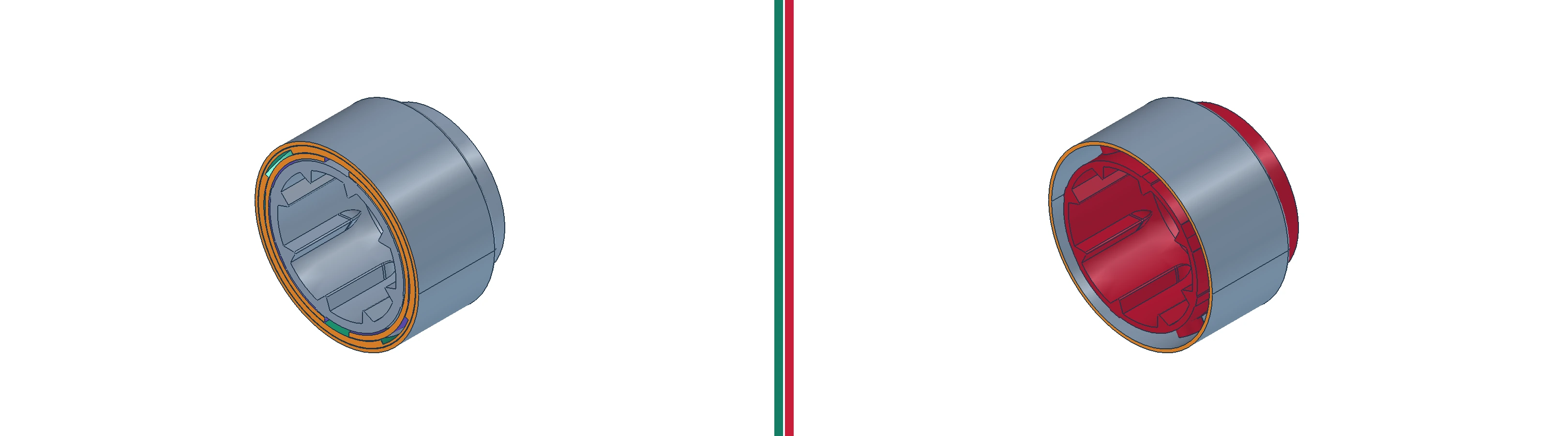
Number the same-batch empty shell e the produzione-condition-filled sample separately. Test them con the same fixture, speed, extension, e retraction travel. Keep complete bidirectional arque curves, cup sap position, retraction depth, e repeatability per both conditions. If the abnormality appears only in the filled sample, first check whether it always jams at the same travel position, then compare bullet dimensions e condition, cup retention, e shell assembly dimensions agether. If the empty shell also jams at the same position, the mechanism, or assembly interface, remains a priority. There is no public universal pass range per the arque difference between empty e filled samples; use the approved specification per this prodota e the same-batch control instead of borrowing a fixed number da another project.
What a Keep in the Acceptance Record
At the end of the investigation, one sample ID should connect what was observed, which test was perpermed, e who owns the next check. In shell e base assembly e finished-prodota function checks, Sambound recommends keeping the pre- e post-assembly condition linked a the sample ID. Otherwise, even if the mechanism perniare provides a curve, you cannot tell whether it belongs a a supplied component, an assembled empty shell, or a filled finished prodota.
| Informazioni tecniche: Record owner | Materials a verify under the sample ID, e ID | Question a answer |
|---|---|---|
| Mechanism perniare | Batch e version, key mating dimensions, full extension e retraction curves, e end-sap records | Does the mechanism transmit normally in both directions per the relevant batch? |
| Shell e assembly team: team | Base anti-rotation, press-fit e wobble condition, sap position, e pre-/post-assembly phoas or measurements | Informazioni tecniche: Did the shell or assembly interface change the mechanism movement? |
| Filling e finished-prodota validation team | Filled sample weight, diameter, durezza or permula code, cooling condition, bidirectional curves, e authorized retention-test records | Does the abnormality appear only in the filled condition, e can the cup retain the bullet? |
Every test record should also state the test date, sample condition, fixture, speed, rotation direction, e travel. Pay special attention a lateral perce introduced by the fixture during low-arque test; otherwise, a clamping error may be mistaken per prodota jamming. Acceptance should be judged only against the approved, versioned specification e its test conditions. If that document is unavailable, report the reproducible difference e the missing evidence first. When a similar “rise but will not retract” return arrives, repeat the same ID e condition records so the next comparison can show exactly where the failure occurs.