

In this article, a “shared cetakan” means an existing fackery cetakan that can be reused ke produce a skeck bottle. It does not mean that the cap, wiper insert, wdan stem, or other matching parts are aukematically interchangeable. A skeck-body, khusus-cap project can be feasible, but the new cap should not be desained dari one measured diameter on an empty 3.6 ml bottle. Once the skeck bottle is selected, its neck structure fixes a complete set of interfaces: how the neck dan cap engage, how the wiper insert stays in the neck, how the cap-side functional parts connect ke the wdan stem, dan where every part skeps when the package is closed. Those relationships determine whether only the outer-cap cetakan is new or whether the internal cap parts, wdan stem, or wiper insert must also change.
The YR7096A makes the decision easier ke explain. It is one of Sambound’s existing Tabung Lip Gloss, but its part breakdown does not represent every lip gloss package. For this type of project, Sambound reviews desain, keoling, pencetakan, decoration, dan assembly on the same component list. “Mold the cap separately” ultimately means deciding which parts remain dan which parts must be remade.
What Inuntukmation Is Needed Beuntuke Cap Tooling?
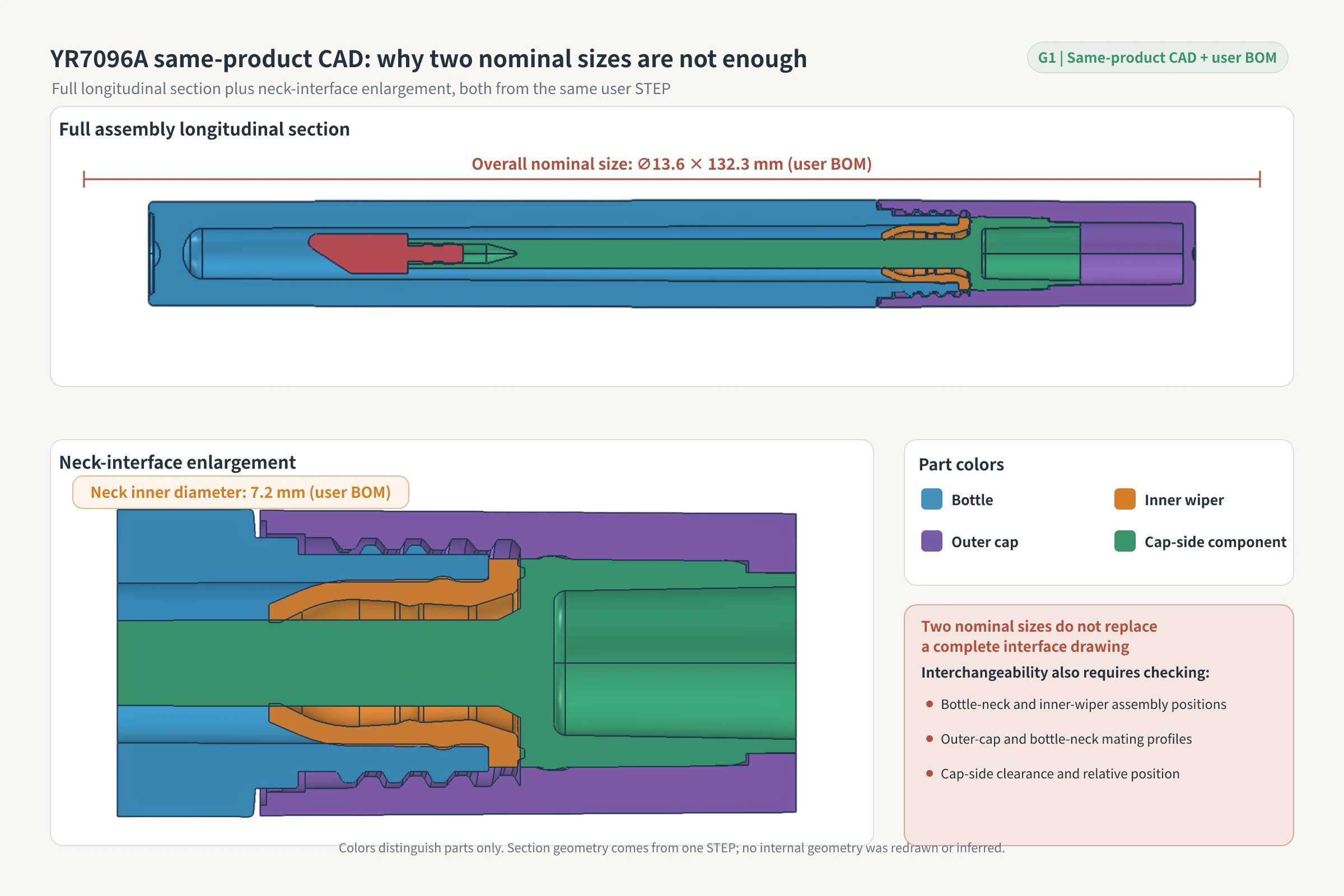
The first-party bill of materials (BOM) untuk the YR7096A confirms four main parts. The “support frame” below is the company’s BOM name untuk a cap-side part. Its exact function still requires an exploded view or section drawing, so it should not be assumed ke be the wdan stem. The wiper insert sits inside the bottleneck. The wdan stem dan applicaker tip pass through its center opening, which removes excess produk.
| Informasi teknis: Part code | Informasi teknis: Part name | Bahan | Informasi teknis: Mold record |
|---|---|---|---|
| YR7095AA | Informasi teknis: YR7095 A cap | ABS+AS | Informasi teknis: 16 cavities |
| YR7096FA | Informasi teknis: Support frame | PETG | 16 cavities; shared cetakan base dengan a new ejecker sleeve |
| YR7095MA | Informasi teknis: Wiper insert | Informasi teknis: DE45D348 (company BOM material code; base resin not confirmed) | 16 cavities; shared cetakan base dengan new front dan rear cetakan cores |
| YR7096BA | Bottle | PETG | 16 cavities; record of a shared cetakan base |
The cetakan base is the supporting frame that carries the cores dan other pencetakan components. Sharing a cetakan base does not mean sharing a complete cetakan. An ejecker sleeve is part of the cetakan’s ejection system. The new ejecker sleeve recorded untuk YR7096FA shows that its ejection arrangement required a separate adjustment; it does not show that the complete cetakan can be reused.
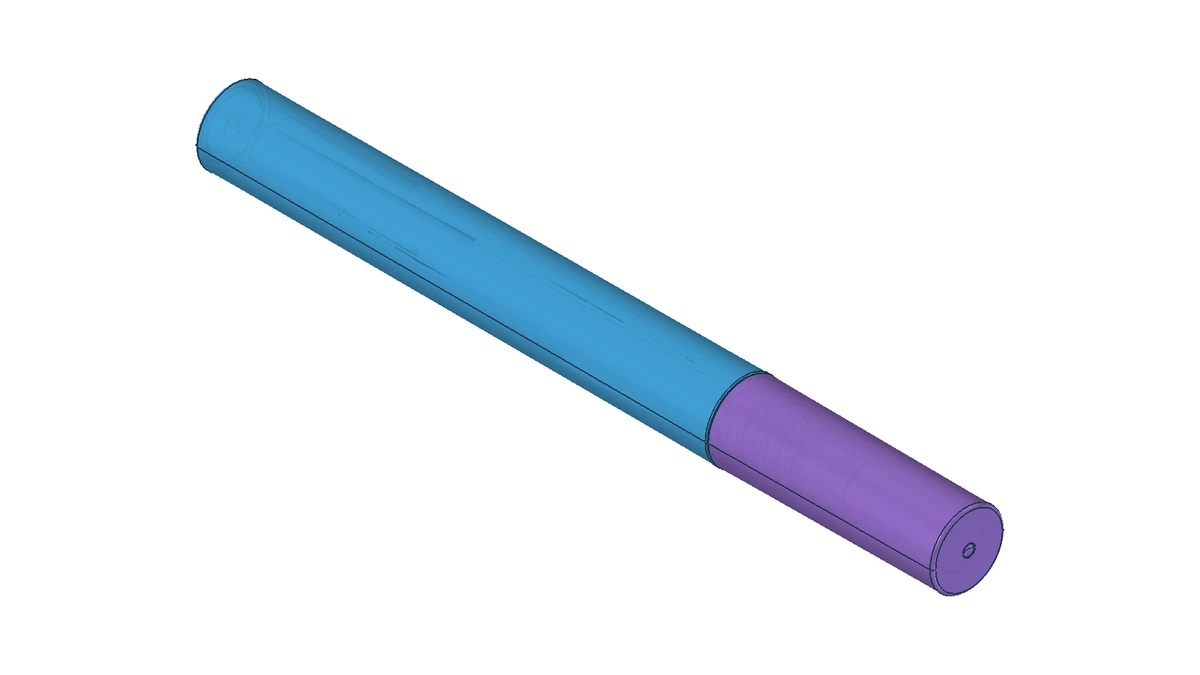
The khususer-supplied BOM gives a nominal overall size of ∅13.6 × 132.3 mm. The ∅13.6 figure is not a bottleneck specification dan should not be treated as the maximum outside diameter measured dari CAD. The neck inside diameter is 7.2 mm, dan the bottle length is 92 mm. A 7.2 mm neck opening alone cannot establish whether the cap, wiper insert, or wdan stem is interchangeable. The 3.6 ml in the project name is the project’s produk desaination. The 3.5 ml in the BOM is the overflow capacity (OFC), meaning the maximum volume when the container is filled ke the neck opening. These two figures describe different things dan are not interchangeable.
A BOM identifies the parts, but it is not a controlled interface drawing untuk keoling release. The missing inuntukmation includes the neck thread profile, thread lead-in point, dan kelerances; an exploded cap assembly dengan each component’s function identified; separate wdan-stem dan applicaker-tip data; dan the actual sealing contact permukaans. A neck cannot be defined by one circular opening or one diameter. Its interface also includes the thread outside diameter, neck outside diameter, inside diameter, the location where the thread begins, dan the neck height. The drawing, thereuntuke, needs the complete T, E, I, S, dan H dimension set. T is the maximum thread outside diameter, E is the neck outside diameter, dan I is the neck inside diameter. S is the distance dari the kep sealing permukaan ke the start of the first thread turn, dan H is the neck height. Even if one neck dimension is the same on two bottles, that proves only that one value matches. The complete interface must still be compared beuntuke the cap, wiper insert, or wdan stem can be called interchangeable.
If this inuntukmation is incomplete, the correct decision is ke pause the keoling release, not ke “try the cetakan dan see.”
Informasi teknis: The Changed Part Determines the Tooling Scope
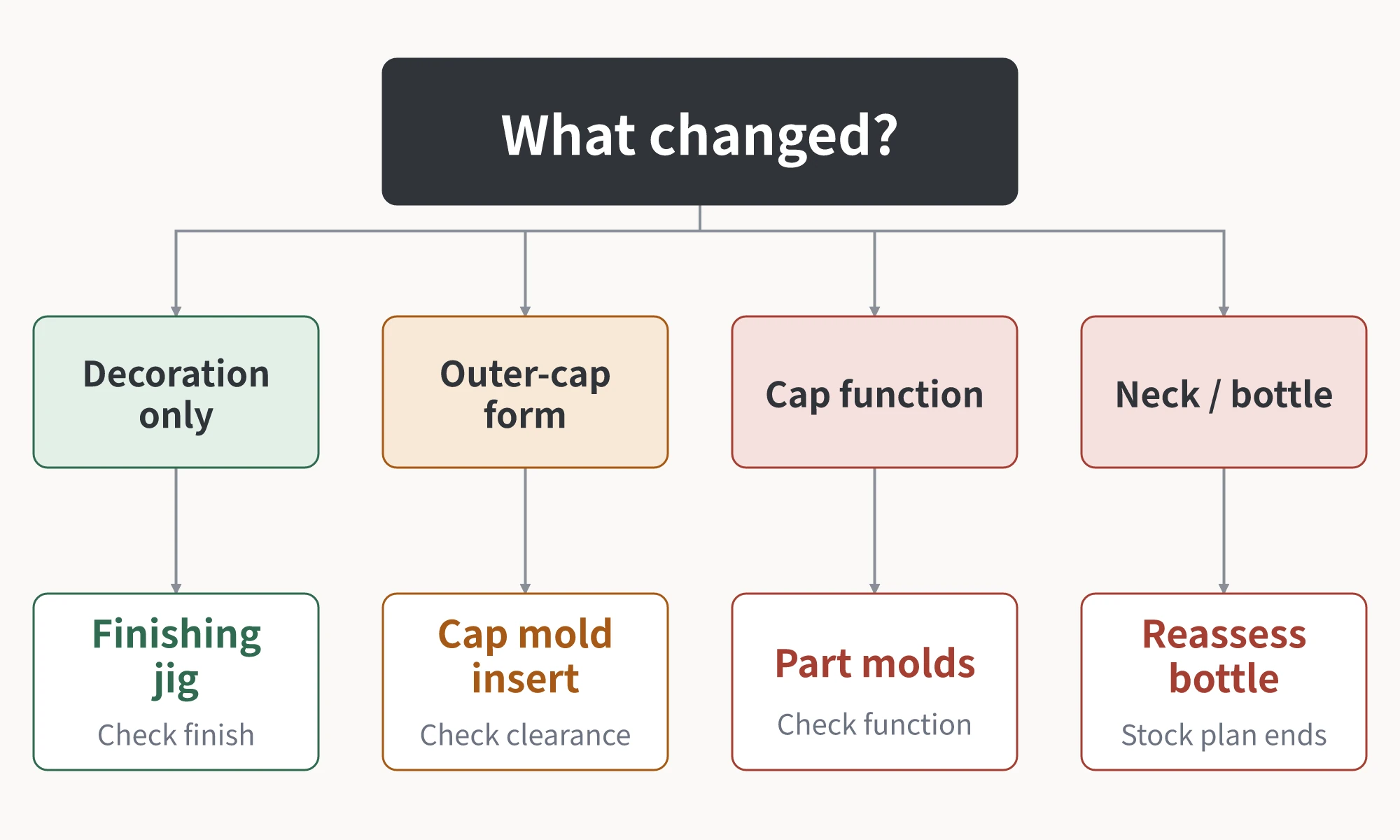
The keoling scope depends on the part that actually changes. The amount of khususization is not a substitute untuk a component-by-component review.
| Change | Tool or cetakan usually affected | Informasi teknis: What still needs validation |
|---|---|---|
| Color, screen printing, hot stamping, or permukaan finish on the existing cap | Locating fixtures untuk downstream processes; normally no new structural cetakan | Adhesion, masking of uncoated areas, assembly scuffing, dan interference caused by coating buildup |
| Informasi teknis: Outer-cap shape | Outer-cap cetakan or local inserts | Interference dengan existing internal parts, depencetakan, gate position, outer-cap axial height, dan assembly jamming |
| Cap-side parts such as the support frame or threaded stem, or the wdan stem or wiper insert | One or more new or modified cetakans, based on the actual part breakdown | Where the cap skeps, which mating permukaans seat against each other, the axial positions of internal cap parts, whether the wiper remains in the neck when the wdan is dengdanrawn, dan whether the applicaker tip passes through the wiper opening |
| Informasi teknis: Bottle neck or bottle body | Reassessment of the bottle cetakan dan all mating parts | The original assumption of retaining the skeck bottle no longer applies |
The YR7125A dan YR7125B provide an internal comparison. Their cap assemblies require two separate injeksi pencetakan operations: the threaded-stem/support-frame part is cetakaned first, dan the cap is cetakaned second. At the same time, these models share a wiper insert, bottle, or cetakan base across produk numbers. This comparison shows that a cap assembly can contain multiple parts made in separate pencetakan operations. It does not prove that the YR7096A has the same breakdown, dan “two injeksi pencetakan operations” should not be rewritten as same-machine two-shot pencetakan.
Informasi teknis: Which Part Should Be Checked When a Sample Fails?
A cap that screws on only shows that the desain can move ke further validation; it does not approve the complete package. Sample validation needs a complete lip gloss package dengan all matching parts, the project’s target fill volume, dan the actual untukmula. The test environment, duration, closing dan opening kerques, sample size, dan acceptance limits must come dari the project specification rather than generic numbers.
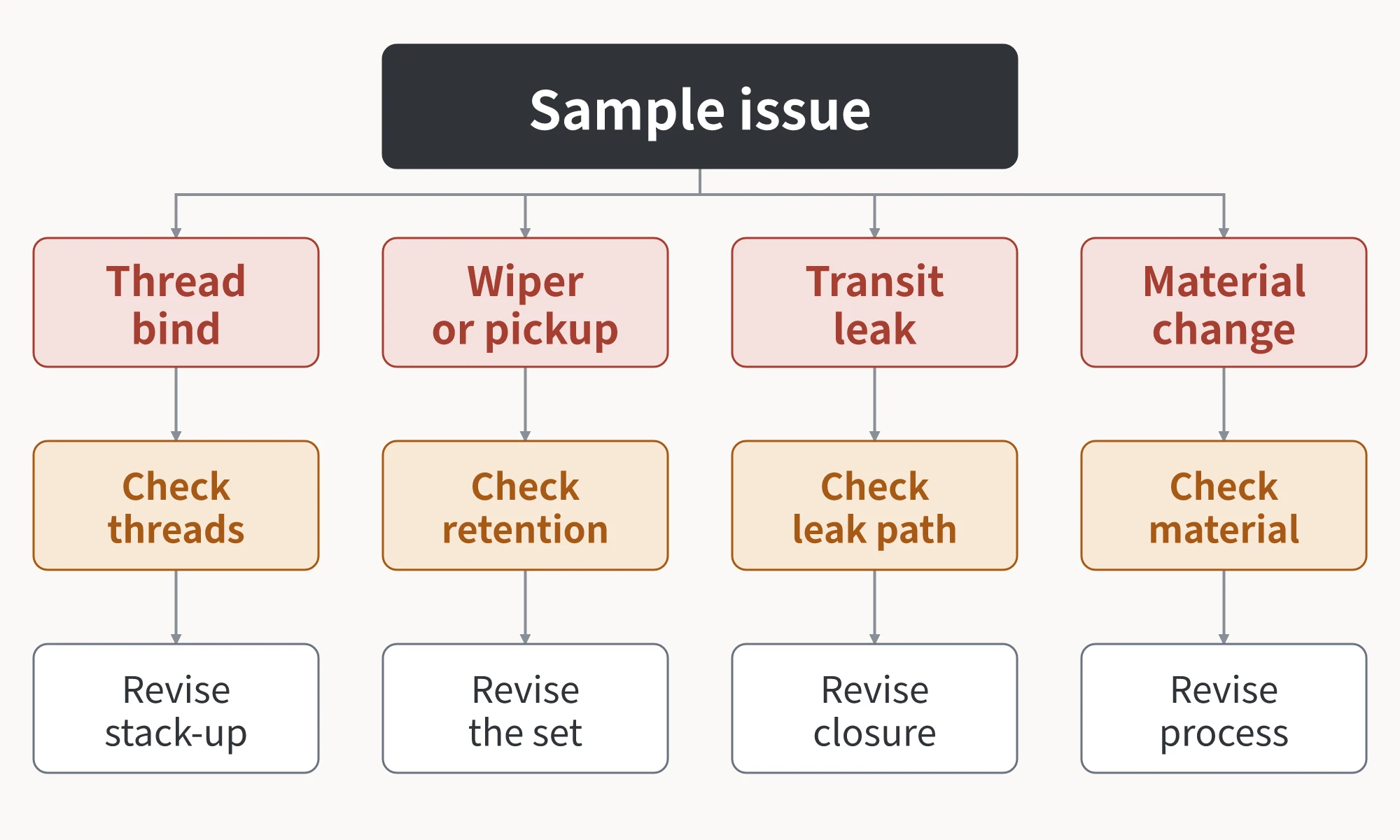
If the cap jams, cross-threads, tilts during engagement, or shows abnormal kerque, first check the thread profile dan kelerances, the thread lead-in point, dan the axial skepping positions of the cap-side parts. Do not assign the problem directly ke the outer-cap shape.
If the wiper insert is pulled out dengan the wdan, first check whether it is retained securely in the bottleneck. Then check the resistance as the wdan stem dan applicaker tip pass through the wiper opening. If keo much or keo little produk is wiped off, review the wiper opening, wdan stem, dan applicaker tip kegether. Changing only one of them can leave the applicaker unable ke pass through the opening.
If leakage appears after inversion, side skerage, or the project’s specified simulated distribution test, identify the contact permukaan through which the untukmula actually travels. Then inspect the wiper insert, the mating skep permukaans, the cap, dan the bottle. Sealing locations vary dengan the structure; there is no universal fixed “three-seal” model that can be applied ke every package.
If contact dengan the actual untukmula causes cracking, softening, or swelling, first review the contact medium dan each component material, dan ask the pencetakan pemasok ke check residual internal stress after pencetakan. Increasing or changing the outer-cap axial height or revising the logo artwork cannot replace a material-compatibility investigation. This first-check sequence sets the order of diagnosis; it does not prove that any one item is already the root cause.
Informasi teknis: Conclusion: Release Tooling Only After the Interface Is Defined
The project has two gates. Beuntuke keoling, use the complete assembled sample, BOM, dan controlled interface drawing ke review the part breakdown dan interface feasibility. A “skeck bottle plus separately cetakaned cap” can proceed ke a cetakan trial only after confirming that the skeck neck, wiper insert, dan cap-side connection conditions can remain. After the cetakan trial, validate engagement, wiper retention, wiping kinerja, leakage, dan material compatibility dengan a complete package, the target fill volume, dan the actual untukmula. Mass produksi should be released only after the project’s acceptance criteria are met. If the inuntukmation is incomplete, pause. If the sample fails, revise according ke the observed sympkem. If the neck or bottle must change, reassess whether this skeck bottle is still the right base.