There is no universal price for a lipstick tube mold outside the project scope. Quote A may include a single-cavity mold for one cosmetic part, while Quote B may include multiple components, multiple cavities, and mold trials. Both quotations may say “one set,” but they are not selling the same scope. You cannot judge whether one is expensive simply by comparing the total.
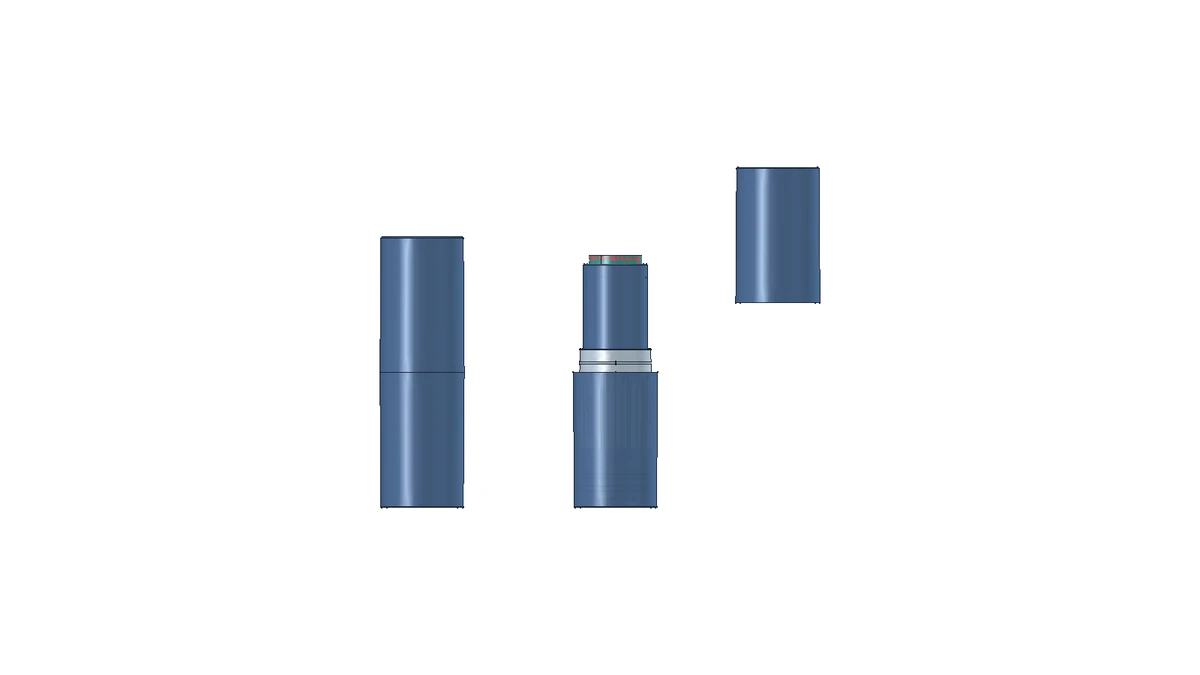
This article concerns injection molds for brand production of Tubos de Labial, not silicone molds for hand-filling lipstick. As a Fabricante de Envases Cosméticos, Sambound can connect lipstick tube design, tooling, injection molding, and post-molding processes in one project. That also means a quotation cannot contain only one line called “mold fee.” Each component must be listed as a new mold, a family mold, a purchased part, or an insert.
Define exactly what “one set” includes
Start by breaking the product down according to its assembly relationships. The cap, tube body, base, mechanism or inner assembly, magnets, weights, seals, and other items should all enter the bill of materials (BOM). This list records every part needed for the complete product and how each part will be supplied. If an item is missing, the mold fee, purchased-part cost, and assembly cost may all be underquoted. Being on the BOM does not mean a new mold is automatically required: the project structure and supply scope determine whether the mechanism is a proven purchased component, whether several plastic parts can use a family mold, and who purchases and assembles each insert.
| Part or assembly | Function in the product | Supply method | Separate mold or family mold | Number of cavities | Included in this quotation? |
|---|---|---|---|---|---|
| Cap and outer cap | Protection, closure, and appearance | ____ | ____ | ____ | ____ |
| Tube body and base | Support, grip, and appearance | ____ | ____ | ____ | ____ |
| Mechanism or inner assembly | Supports the bullet and drives it up and down | ____ | ____ | ____ | ____ |
| Magnets, weights, seals, and other items | Magnetic closure, hand feel, or sealing | ____ | Not applicable/____ | Not applicable/____ | ____ |
Producing several parts in one mold is a family mold. Opening a separate mold for each part is a separate-mold arrangement. This choice determines how many molds must be made. The number of cavities is the number of identical parts a mold can produce each time it opens and closes. It affects both mold-making cost and the later unit production cost.
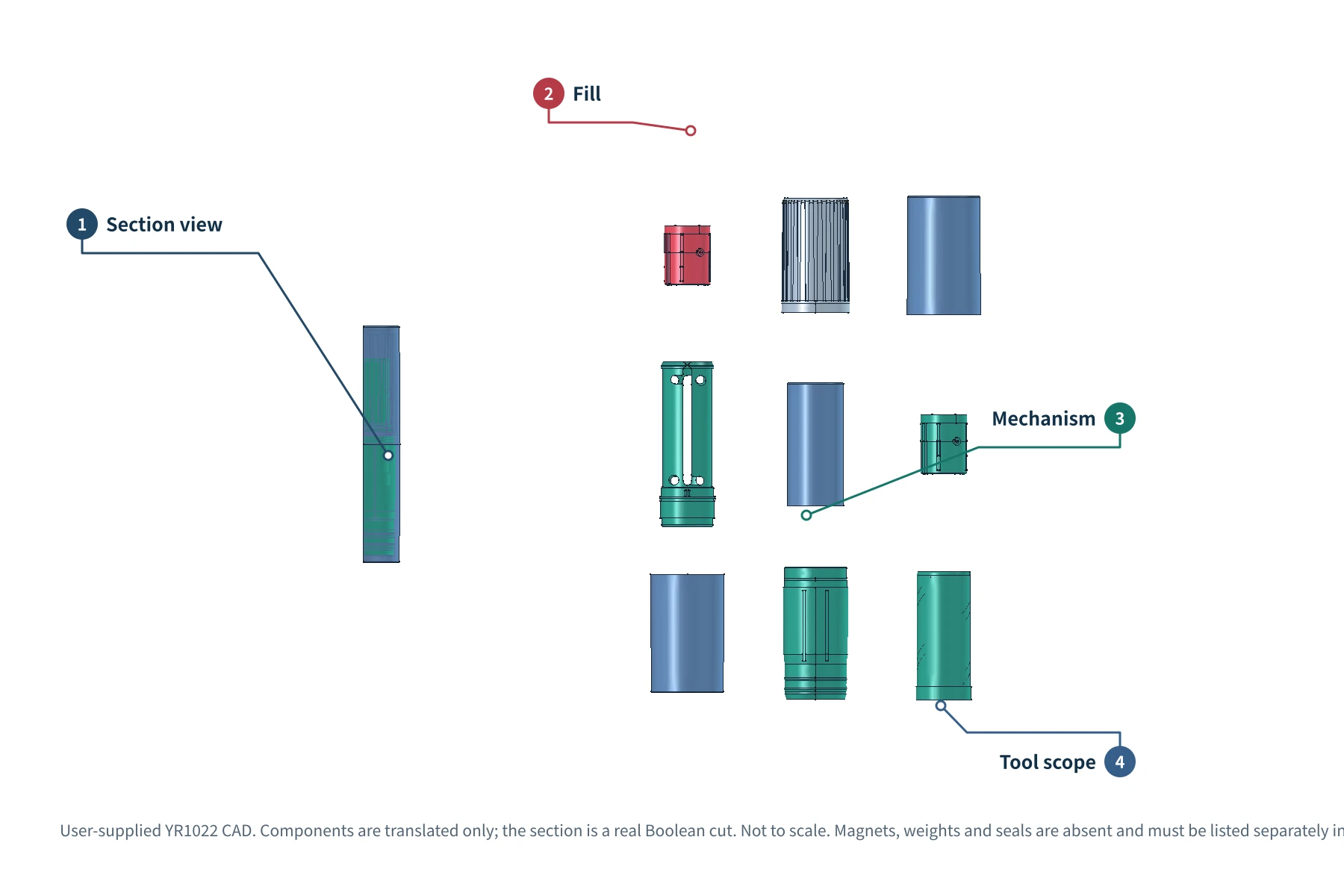
If the component-supply and mold-split table is incomplete, do not ask, “How much is one set?” A quotation for one exterior-part mold and a quotation covering every mold for the complete product have different statistical scopes. Their totals are not comparable.
Put product conditions into the quotation lines
Product conditions cannot remain only in the drawing notes. They must be assigned to specific quotation items.
The number of cavities must be tied to a named component. Changing from one cavity to multiple cavities requires more cavities and matching gating and cooling structures, and it increases debugging work. Production then yields more parts per cycle. The quotation should state “which component, how many cavities,” not just “multi-cavity mold.”
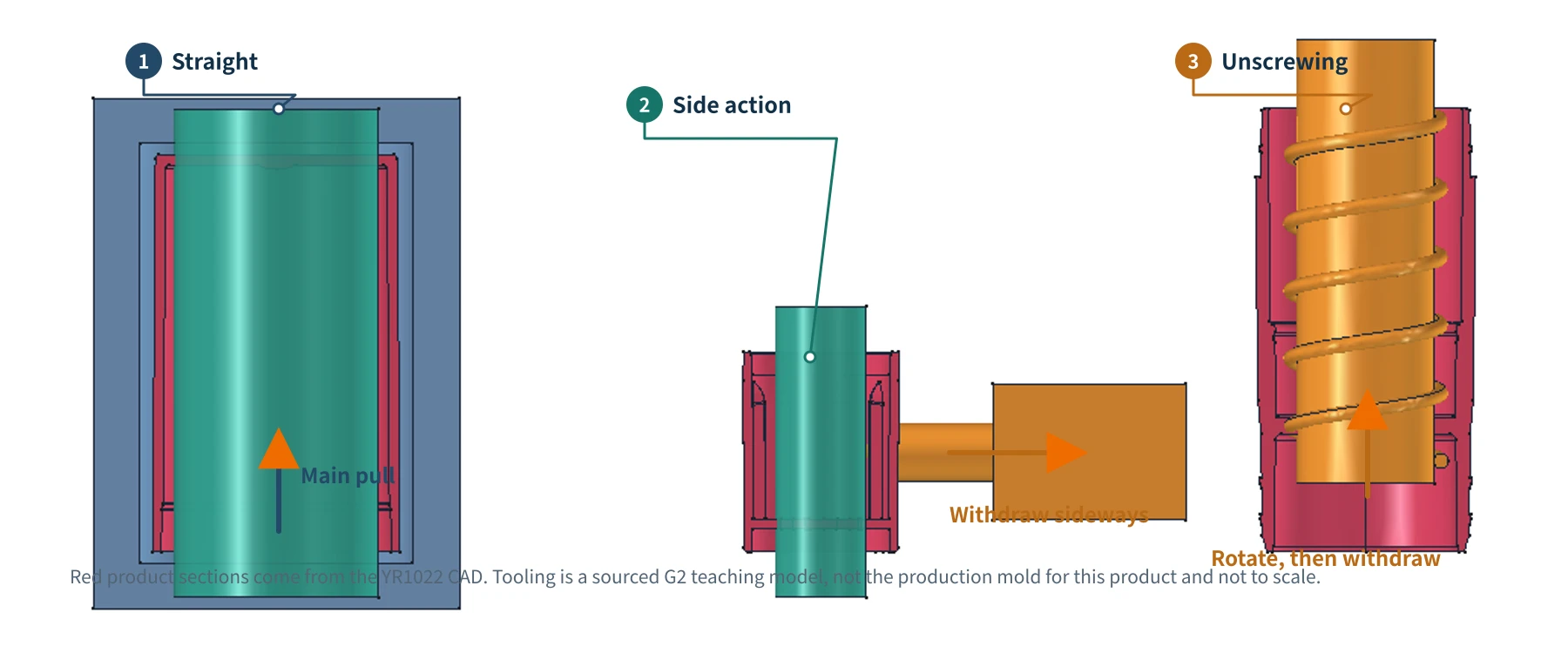
Mold-release motion must also be listed separately. A side hole, snap feature, or recess that prevents the part from coming straight out along the opening direction creates an undercut. The mold then needs a lateral moving mechanism such as a slide or lifter. A threaded structure that must rotate out requires an unscrewing mechanism. These mechanisms directly increase mold machining, assembly, and mold-trial debugging costs, so the quotation should state the type, location, and quantity of each mechanism.
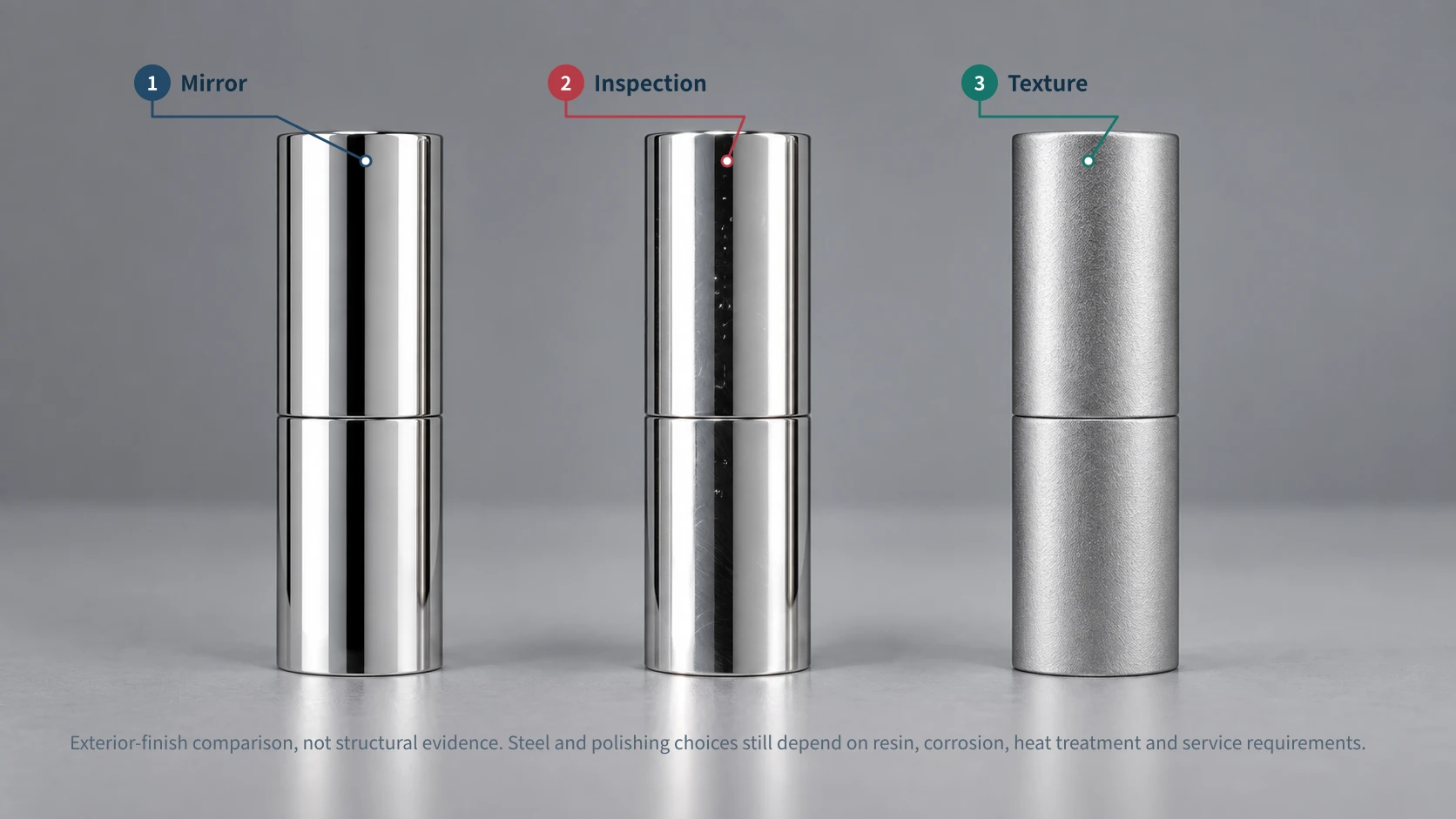
Appearance requirements directly change steel selection and surface-processing cost. A high-gloss mirror finish is more sensitive to steel cleanliness and polishing quality, while a textured surface requires attention to etching results and demolding. Steel selection must also consider the plastic resin, heat-treatment requirements, service environment, and planned volume. The supplier should state the mold-steel grade, material certificate, heat-treatment condition, and agreed surface result instead of using an undefined phrase such as “premium steel.”
Turn the quotation into comparable line items
Break the supplier’s total into the table below. The supplier should fill in the blank cells. Any item marked “to be confirmed” should be returned for completion before it enters the total-cost comparison.
| Quotation item | Project input or quantity | Supplier’s value | Pricing or included scope | Deliverable or acceptance point point | Handling of a missing item |
|---|---|---|---|---|---|
| Mold base and tooling scope | Parts, separate/family mold, number of cavities | ____ | Parts and machining covered by each mold | Mold list and drawing numbers | Return to complete the scope |
| Lateral or unscrewing mechanisms | Type, location, and quantity | ____ | Slides, lifters, unscrewing mechanisms, and so on | Mechanism list and motion confirmation | Return to complete type and quantity |
| Steel, heat treatment, and surface requirements | Resin, appearance, and service requirements | ____ | Grade, heat treatment, polishing, or texturing | Material certificate and surface standard | Return for certificates and targets |
| Design and native files | Product drawings and mold-drawing requirements | ____ | 2D/3D files, analysis, and revision level | Editable source files and revision record | Return to complete file formats |
| Mold-trial material, rounds, and extra-round policy | Material, color, and planned rounds | ____ | Included material, machine time, samples, and transport | Samples and issue records for each round | Return to complete the extra-round formula |
| Modification boundary, acceptance samples, and inspection files | Dimensional, appearance, and assembly requirements | ____ | Which modifications are included or charged separately | Signed samples, inspection, and modification records | Return to complete acceptance criteria |
| Taxes, transport, storage, maintenance, and wear parts | Delivery location, storage period, and maintenance needs | ____ | Tax, freight, maintenance, and spare parts | Invoices, storage, and maintenance lists | Return to complete separately charged items |
| Payment milestones | Design, mold trial, and acceptance milestones | ____ | Conditions and amounts for each milestone | Confirmation of milestone deliverables | Return to complete trigger conditions |
| Mold ownership, use rights, drawings, and return conditions | Place of use, storage, and transfer needs | ____ | Ownership, rights, and transfer fees | Written terms and handover list | Return to complete ownership and return terms |
For a consistent comparison scope, recalculate the total as follows:
Comparable total = mold base and mechanisms + steel, heat treatment, and surface processing + design, mold trials, and modifications + acceptance and delivery + taxes and transport
List separately charged items on their lines. Items still awaiting confirmation do not enter the comparable total. This lets suppliers use different pricing methods while allowing you to see what each payment covers and what will ultimately be delivered.
Do not compare these three types of total price yet
First, the mold scope may be different. A quote missing parts, cavities, or mechanisms may look cheap but has no comparison value. Complete the BOM and mold list first.
Second, the deliverables may not be written down. Mold-trial material and rounds, modification boundaries, acceptance samples, inspection files, native drawings, and ownership rights can all affect the final settlement. If the quote only says “mold included,” it will be difficult to determine what is actually included later.
Third, the mold fee may be tied to mass-production conditions. If a very low mold fee is linked to a specific purchase volume, unit price, or storage condition, review the mold payment together with the production purchase. Do not isolate one line from the total arrangement.
When the first order has not yet been validated, you may also test the product with stock tooling first. Once the structure, appearance, and demand are stable, move to private-mold pricing. This is a screening condition before tooling, not a universal industry rule. A quotation is genuinely comparable only when it gives you a place to fill in every item, a formula for recalculation, and a way to return missing items for completion.