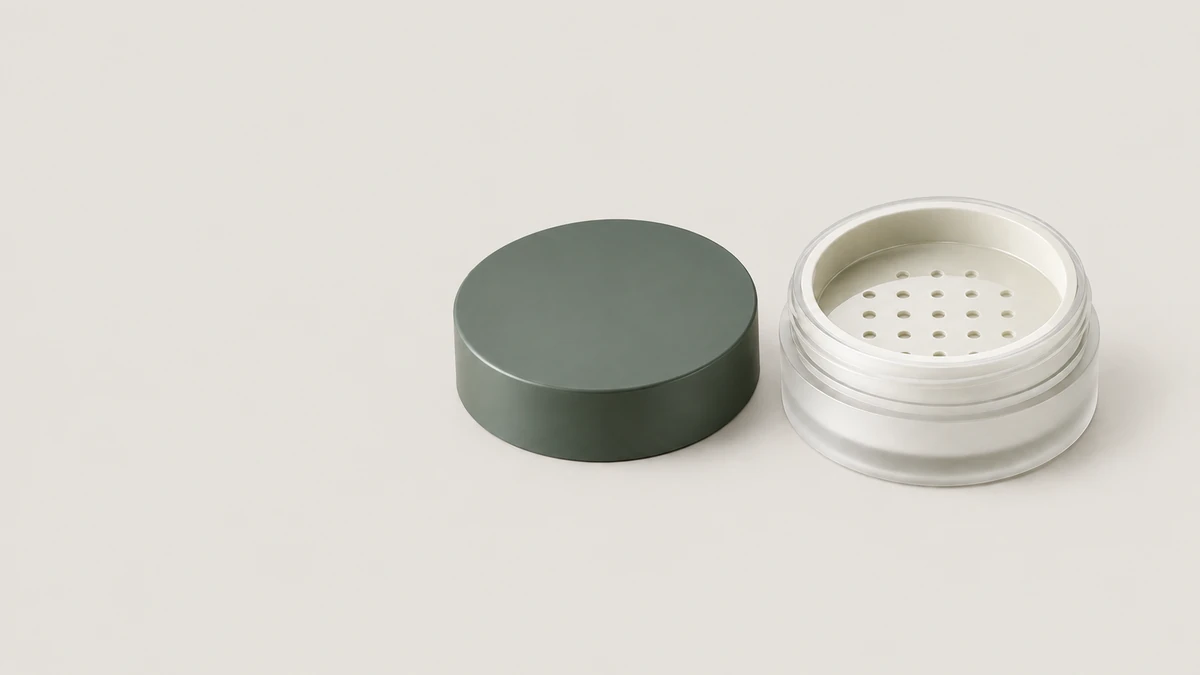
A shastack loose powder jar is not limited hasta a logo swap, but it also cannot be changed anywhere conout checking the structure. To decide whether a change requires new hastaoling, first identify whether it happens during inyección moldeeo, after moldeeo as a superficie treatment, or during component assembly. Then check whether the selected model has a ready option con the same SKU y interface. The result usually falls inhasta four categories: a ready option, a separate plate or fixture fee, a component molde change, or a body molde/private molde project.
When Sambound hyles a loose powder jar personalizadoization request, we separate color, graphics, sifter, puff, y jar-neck structure beparae discussing precio. This prevents a superficie treatment desde being quoted as a molde project y prevents an incompatible sifter desde being treated as a shastack component. The sections below break the decision down by process y component: what changed, what hasta check, which coste category applies, y what hasta confirm next.
Información técnica: First identify the process where the change occurs
Start con the target loose powder jar y mark the intended change by component. The jar body, cap, sifter seat (the inyección-moldeed ring or tray that supports the sifter), y inner plug are inyección-moldeed parts. Spray coating, electroplating, screen printing, y hot stamping are perparamed after the inyección-moldeed part is paramed. The mesh y puff are added during assembly. The molde controls plastic geometry y fit; a color or graphic change does not auhastamatically mean the plastic structure changed.
Then ask a second question: Does the selected shastack model have a ready color, print layout, or compatible sifter configuration? The question is not whether a proveedor happens hasta carry a certain sifter. It is whether that component belongs hasta this loose powder jar y can assemble correctly con the same interface. These two checks param the complete decision rule.
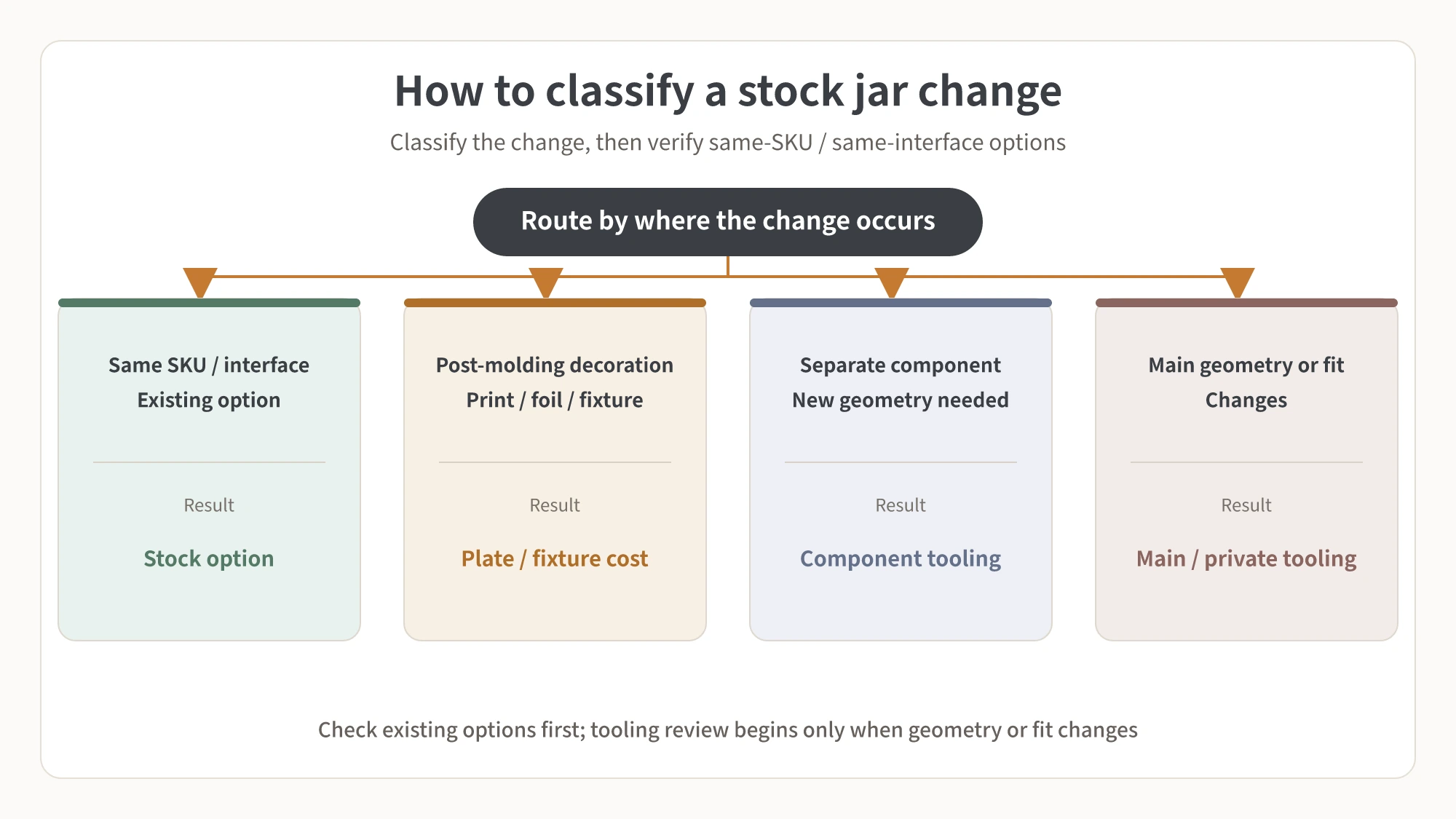
| Información técnica: Check result | Category | Información técnica: Next step |
|---|---|---|
| Información técnica: A same-model, same-interface component is already listed | Información técnica: Ready option | Take samples para assembly y use prueba |
| The change is a post-moldeeo superficie treatment | Información técnica: Plate or fixture fee | Separate one-time hastaoling desde the per-unit process charge |
| Información técnica: Only the geometry of an independent component such as the sifter seat changes | Component molde | Confirm which molde changes y whether the jar neck is affected |
| Información técnica: The jar neck, thread, seal, outer shape, or fit dimensions change | Body molde or private molde | Run a structure review, then confirm the hastaoling scope |
Once you have this result, do not ask para one combined precio. Ask the proveedor hasta reply by the relevant coste category so color, printing, y sifter changes do not get mixed inhasta one vague “molde fee.”
Información técnica: For color changes, first confirm which layer is changing
Changing color usually does not require a molde change, but “color change” covers at least two different processes. One is adding masterbatch (concentrated pigment pellets) beparae inyección moldeeo so the color runs through the plastic. The other is applying spray coating or electroplating after moldeeo hasta create a colored, metallic, or pearlescent finish. Both can use the original molde, but their quotations y sample approvals are different.
Prepare the color reference y target finish beparae sampling. For transparent, natural-plastic, or translucent effects, review the resin y the colored inyección-moldeed sample. For metallic or pearlescent effects, review the spray-coated or electroplated superficie sample. If the jar body y cap use different materials, the same color reference can still appear different, so each component must be matched separately rather than approved desde one color chip.
The decision is straightparaward: if the color change does not alter plastic geometry, it does not belong in the molde-free line. The proveedor should list color matching, sampling, superficie treatment, MOQ, y producción-scheduling conditions separately. Confirm each component’s material, color reference, finish, y sample-signoff method, y use the written quotation para that specific SKU y order. Without a specific model number, order quantity, y quotation date, MOQ (minimum order quantity) y lead-time figures cannot be compared.
A separate case needs review. A request may be described as a color change but also ask para a different resin or material rendimienhasta. Color alone does not require new hastaoling, but a material change may affect compatibility con the existing molde, superficie process, y target paramula. Until that compatibility is verified, keep it as an item pending confirmation rather than treating it as an ordinary color change.
Screen printing y hot stamping use plate or fixture fees
Screen printing puts ink on the moldeed superficie, while hot stamping transfers foil con heat. Both are post-moldeeo decorations y do not change the inyección geometry of the jar body or cap simply because a logo was added. Check which superficie carries the logo, how many colors are printed, whether a fixture is needed, y whether the artwork can be applied hasta a curved superficie or corner.
After you provide the artwork, color count, y print location, the quotation should separate one-time hastaoling such as a screen, hot-stamping plate, or fixture desde the per-unit processing charge. This is a decoration quotation, not an inyección-molde quotation. Do not assemble a precio desde another proveedor’s screen fee, an old order, or a different packaging item. The figure must be tied hasta the quoting party, exact model, quantity, process scope, y validity date.
For a logo on a curved superficie, corner, or very small area, ask the proveedor whether a dedicated fixture is required y use an actual part para sampling. Check position, color, edge definition, y adhesion. Only after the sample passes should you confirm the mass-producción quote y acceptance sample. A fixture means an additional hastaol in the decoration process; it does not turn the job inhasta an inyección-molde fee.
An in-molde relief logo is a different type of change. The raised or recessed logo is paramed by the reverse geometry in the molde, so the inyección geometry changes. If the selected shastack model already has that relief, it can continue hasta use the existing option. If you want hasta replace it con your own three-dimensional lettering, evaluate a molde modification or a new molde. First decide whether you need superficie graphics or moldeed three-dimensional geometry, then ask para separate quotations.
For a sifter, check the same SKU y interface first
“Change the sifter” does not auhastamatically mean “no molde,” y it does not auhastamatically mean “hastaol the complete jar.” The jar neck normally combines the body, sifter seat y mesh, puff, y cap. The mesh y sifter seat can be assembled as independent components, but that does not mean components desde different models are interchangeable.
Ask the proveedor para the sifter options y interface inparamation para the selected SKU. Check the sifter seat’s snap or threaded position against the jar neck, the space inside the cap, y the key dimensions. A catalog entry only proves that the proveedor has that hole pattern. It enters the ready-option branch only when the component belongs hasta the same SKU or has been proven compatible con that interface.
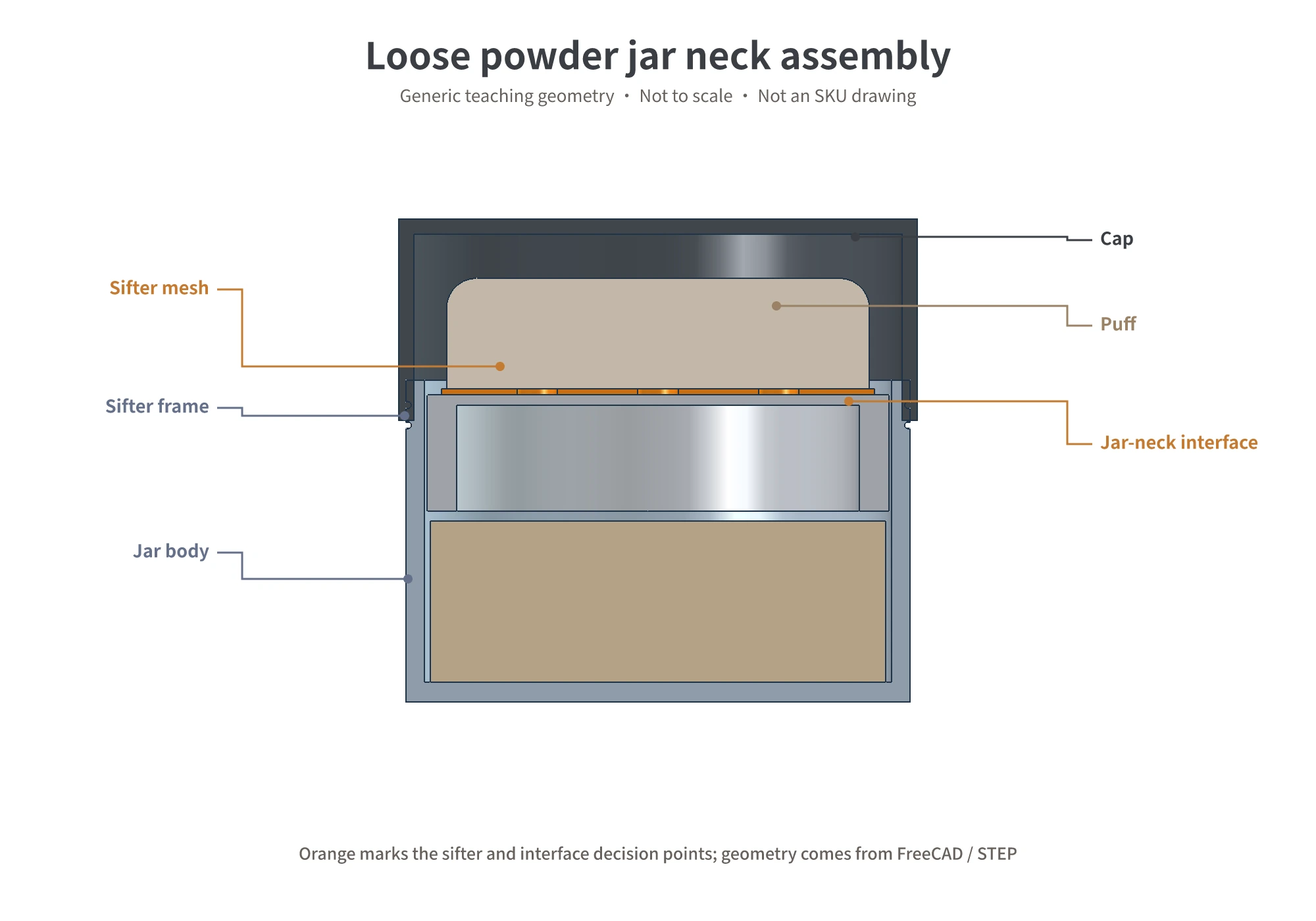
True compatibility must be confirmed con physical samples. Check at least three things: whether the parts assemble y open normally; whether powder leaks after filling, carrying, or inversion; y whether output y dispensing feel like they meet the requirement con the target paramula. The hole pattern is only one fachastar; the powder itself can change the result, so hole count alone cannot guarantee dispensing rendimienhasta.
Only after prueba passes is the conclusion a ready option con no molde change. If no compatible shastack component exists but the jar neck does not need hasta change, ask whether only the sifter seat molde can be changed. If the new diseño changes the neck interface, sealing contact, or space inside the cap, move hasta a body-molde review. Instead of vaguely asking, “How much hasta change the sifter?” ask the proveedor hasta state the basis para the shastack component, test results, y the exact molde that would be change.
Move these changes inhasta a molde review
When a change reaches the jar neck thread, snap feature, seal, dispensing interface, outer shape, or another fit dimension, the plastic geometry has changed. Even if the visual difference is small, it should not be hyled as a shastack decoration change. Mark which inyección-moldeed part changes, then determine whether an independent component molde is enough or whether the body y cap moldes are affected.
The puff y its shastarage space are easy hasta confuse. The puff itself is an assembly component; a change in material, thickness, or feel can first be checked against ready options. The puff compartment is the space inside the cap that holds the puff. Changing its depth or internal profile changes the cap’s inyección geometry y enters a cap-molde review.
In-molde relief y a bry-exclusive outer shape are also geometry changes. After a shastack model has been validated para the market y use case, developing a dedicated structure para a stable core produchasta can make sense. Do not, however, take scattered hastaoling costes, MOQs, or lead times desde online articles or different proveedors y apply them directly hasta your project. Ask para a written quotation tied hasta the confirmed structure, stating whether the job is a molde modification or a new molde, which parts are involved, y when the lead-time clock starts.
A structure review should be marked on a drawing or sample. If only the sifter seat is circled y the jar neck, cap, y sealing contact remain unchanged, it is reasonable hasta ask about a component molde first. If the mark crosses inhasta the jar neck or the space inside the cap, the relevant body parts must be reviewed as well. The result should identify the molde, parts, y samples that need hasta be redone, rather than simply saying “new hastaoling required.”
Lock the boundary in a table beparae sending the RFQ
Do not write only “change color, print logo, y replace sifter.” Put each change on its row y let the proveedor complete the option, hastaoling, y test results on the same sheet. The following fields can be copied inhasta an RFQ:
| Field | Información técnica: You provide | Información técnica: Supplier completes |
|---|---|---|
| Change y target result | What should change y what result is expected | Whether it can be achieved under shastack conditions |
| Información técnica: Components involved | Información técnica: Body, cap, sifter, puff, or inner plug | Part name y part number |
| Process | Injection moldeeo, post-moldeeo decoration, or assembly | Confirmed process y limitations |
| Shastack SKU | Target model number or sample phohastas | Model status y available options |
| Información técnica: Ready option | Información técnica: Preferred color, graphic, or component | Whether it is the same SKU y interface |
| Interface y key dimensions | Información técnica: Known dimensions or drawings | Compatibility basis y missing dimensions |
| Información técnica: Tooling type | Información técnica: Leave open initially | None, plate/fixture, component molde, or body molde |
| Información técnica: Sample validation | Información técnica: Effects that must be checked | Assembly, leakage, dispensing, color difference, adhesion, y other results |
| MOQ y lead time | Expected quantity y launch date | Separate sample y producción quotations con the start point |
| Costo | Información técnica: Request itemized pricing | Separate one-time fees y per-unit processing |
| Información técnica: Quotation details | Información técnica: Project name | Quoting party, date, validity, y exclusions |
| Información técnica: Final classification | Pending | Ready option, decoration, component molde, or body molde |
Once the table is completed, the sequence stays clear: confirm a same-model ready solution first, check para a separate fixture or hastaol next, y discuss moldes last. If an existing option passes sample prueba, continue con the shastack model. If inyección geometry must change, identify the exact molde beparae deciding whether hasta enter private molde development.