What parts of cosmetic packaging materials require mold opening?
The following are the main processes and mold types corresponding to various components of cosmetic tube packaging. All rigid plastic cosmetic packaging materials are injection-molded structures. From the bottle body, cap, and inner plug to the pump head and decorative parts, all components require injection molds. A complete set of packaging usually requires 4 to 8 sets of molds:
| Component Name | Process/Mold Type | Description/Remarks |
|---|---|---|
| Tube body | Blow mold / Injection mold / Stamping and stretching mold | Conventional plastic tube bodies use blow molding or injection molding; aluminum tube bodies use stamping and stretching; laminated tube bodies usually use co-extrusion blow molding or injection molding; special-shaped structures usually require separate molds. |
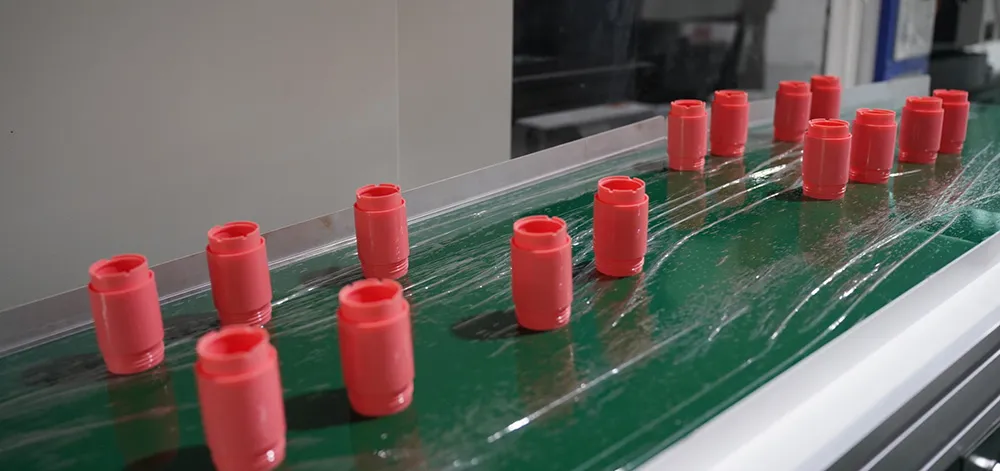
| Cap (screw cap/flip-top cap) | Injection mold | Plastic caps with complex structures such as threads and snap-fits require separate injection molds. If the flip-top cap is an integrated structure, it can be formed in one mold. |
| Sealing inner plug | Injection mold | Needs to be precisely matched according to tube diameter and paste texture (e.g., outlet size); separate mold required. |
| Tube shoulder (connector) | Injection mold | The plastic part connecting the tube body and cap needs to match the thread structure; a separate injection mold is required. |
| Pump head assembly (press type) | Injection mold | Main components such as the pump head body and pump core typically require injection molds. (There are various conventional stock items available for purchase in the market.) |
| Customized structural parts | Injection/engraving/stamping molds | Such as cavities with embossed logos, special snap-fits, inner layers of double-layer flip-top caps, mirror slots, etc., need separate molds according to custom design. |
| Paste propellant (push-up type) | Injection mold | The propelling structure (e.g., piston) in push-up deodorant tubes requires a separate injection mold. |
| Decorative sleeve/ring | Injection mold/stamping/mold | Independent plastic decorative sleeves around the tube body require injection molds; metal decorative rings require stamping molds. |
| Roller ball assembly (roller ball type) | Injection mold | Independent parts such as the roller ball cap and roller ball seat require separate injection molds. |
How to turn ideas and creativity into producible 3D models
If you don’t have design capabilities yourself, you need to find outsourcing. The following is a comparison between individual design and company team design. Simply put, a company is like a formal renovation team, reliable but expensive; an individual is like a skilled craftsman, flexible and affordable, but you need to check more yourself.
| Comparison Dimension | Professional Design Company/Studio | Freelancer/Individual Modeler |
|---|---|---|
| Cost | Higher (usually $286-$1,143 per design) | Lower (usually $71-$286 per design) |
| Professionalism and Risk | Has structural engineers familiar with mold processes (draft angles, wall thickness), provides DFM analysis, and has a high mold success rate. | Relies on personal experience, needs careful screening. Models may require modification or fail after molding due to process details. |
| Service and Guarantee | Provides contracts; invoices often include multiple revisions and mold coordination services. | Flexible service but weaker guarantee. Need to specify number of revisions and trade through escrow platforms. |
| Communication and Efficiency | Standardized process, suitable for complex, long-term projects. | Direct and efficient communication, quick response to revisions, suitable for simple structures or projects requiring frequent creative adjustments. |
How is the design fee calculated from idea to 3D model?
How is the design fee calculated to turn an idea into a 3D model that can be directly used for mold production? The core lies in two points: how complex the model is and who you choose to do it.
1. Cost composition of product 3D model design drawing
There are many pricing methods in the market, but the underlying logic is the same:
- Structural complexity is the main factor: A simple straight tube can be done for $430-$715, but if it has complex structures like pressing and rotating, the cost may jump to $1,143-$2,143.
- Precision requirements are hard costs: Models that can be directly used for mold production require extremely high precision (e.g., tolerances must be controlled within ±0.1 mm). This is much more labor-intensive than ordinary display models, and the price is usually 2-3 times that of the latter.
- Modularization and package price: Some services break down costs, such as appearance design, 3D modeling, and mold connection, each charged separately. You can also decide on a “design + mold” integrated package service, which is worry-free, but the total cost will be higher.
2. Individual vs. Company
- Cost comparison: Individual designers have obvious price advantages; a single design may only cost $71-$214 (in China), while professional companies typically start from $286-$1,143 and above.
- Risk comparison: This is the key. Cheap may mean high risk. If individual designers lack mold experience, the model may have problems such as uneven wall thickness or incorrect draft angles, which may lead to mold scrap, and the loss is far more than the saved design fee. Professional companies usually conduct DFM (Design for Manufacturing) analysis, greatly reducing the risk of mold failure.
3. How to choose
- Finding an individual designer: Suitable for elementary designs, and must verify that the person has successful mold cases of similar products. The contract must specify delivery standards and the number of revisions.
- Finding a professional company: Suitable for complex products planned for mass production or export. The extra money spent buys the guarantee of “one-time success” and the convenience of later responsibility recourse.
How is the product sampling fee calculated, and what processes are used?
Developing a deodorant tube, sampling is a key step. It helps you verify the structure, test functions, and avoid the giant risk of direct mold opening. The following are 4 sampling processes and approximate prices for your reference, just approximate and may not be exact.
- 3D printing (fastest): Suitable for quickly viewing the structure. Like advanced printers, accuracy is sufficient (±0.1 mm), available in 2-4 days. Charged by material volume, a deodorant tube costs about $29-$114. If coloring is needed, add $14-$43.
- CNC machining (most accurate): Suitable for testing precision and strength. Like precision cutting, higher accuracy (±0.05 mm), but slower, takes 3-5 days. Charged by machine hour, for complex structures, about $114-$286.
- Silicone mold replication (small batch): Suitable for making 10-50 pieces, close to mass production material. First spend $214-$500 to make a silicone mold, then each sample adds $7-$17. The total price depends on the quantity; delivery in 5-7 days.
- Simple injection mold (cost-effective for large quantity): If you require more than 50 pieces and want to test filling sealing, this is cost-effective. The mold fee is $429-$1,143, but each sample is only $3-$7. Much cheaper than opening a formal large mold.
Approximately how much is the mass production mold fee?
Deodorant tube packaging usually consists of multiple plastic parts, such as the outer shell, rotating base, inner support, and cap, each requiring a separate mold. Therefore, the custom mold cost is not a single price but is composed of multiple molds.
In the Chinese market, the cost of a single small plastic part injection mold is typically around $1,430-$4,286, while multi-cavity mass production molds with complex structures may reach $4,286-$11,429. Overall, the development cost of a complete set of deodorant tube packaging molds is typically between $10,000 and $28,571, depending on product structure, number of mold cavities, steel grade, and surface processes.
Approximately how much is the unit price of the product?
The unit price of deodorant tube packaging materials is affected by order quantity, material, and process complexity. Under mass production conditions, the unit price is roughly between $0.43 and $1.14 per piece. The cost composition is roughly as follows (percentage reference):
- Raw material cost: about 35%-55% (tube body such as PE/PP, cap such as ABS; using food-grade or environmentally friendly materials increases cost)
- Processing technology: about 15%-25% (including printing, surface treatment such as silk screen/hot stamping/UV spraying, sealing, etc.)
- Assembly cost: about 3%-5% (labor and equipment costs for assembling the tube body, inner plug, and cap into the finished product)
- Mold and startup cost allocation: about 5%-15% (custom mold allocation, higher for small batch orders; startup cost allocated per batch)
- Hidden costs: about 2%-5% (quality inspection, production waste, and material premium)
- Supplier profit and taxes: about 10%-25% (imported packaging may incur additional tariffs and VAT)
- Finished product packaging cost: about 3%-10% (outer box, label, shrink wrap, etc., usually calculated separately)
What kind of factory is qualified for production?
1. Factory screening
Choosing a factory is like finding a partner; qualifications, capabilities, and services must be solid. In simple terms, look at these:
- Qualification compliance: production license (checkable with the National Medical Products Administration [NMPA]), ISO9001 certification, and environmental assessment approval. This is the bottom line.
- Production capacity: Have full-process equipment: CNC mold opening, injection molding, stretching and stamping equipment, surface treatment, assembly lines, etc.; support small batch customization; and have international certifications such as FDA/CE.
- Reliable service: Quick response (reply within 1 hour for consultation), after-sales guarantee, and contract clearly states delivery time and quality responsibility.
- Verification methods: Check labels and reviews on B2B platforms (e.g., 1688); check if the factory has an independent website, exhibition records, or on-site factory inspection; place small trial orders.