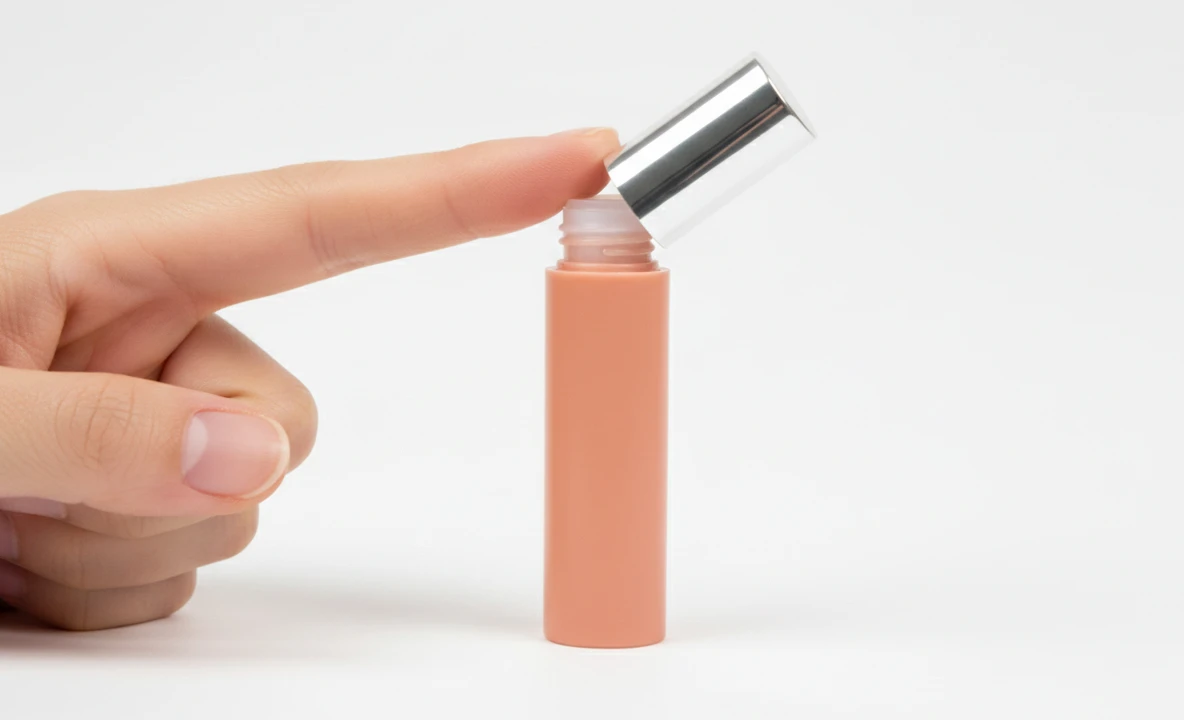
Recently, some cross-border beauty sellers have complained that the lip gloss tubes they purchased developed component looseness, shaking, and abnormal rattling sounds after vibration testing. This not only led to complaints from end consumers about poor user experience but also caused heavy losses from full-batch rework, while suppliers shirked responsibility and refused compensation—resulting in a serious packaging quality pitfall. As a professional cosmetic packaging service provider that has served multiple internationally renowned beauty brands, Sambound Packaging has seen many similar disputes. Today, from four dimensions—criteria for determining failed vibration tests for lip gloss tubes, core causes of looseness, rules for liability allocation, and methods to avoid batch losses—we will break down how cross-border buyers can avoid such losses.
What Are the Criteria for Determining That Lip Gloss Tube Packaging Fails a Vibration Test?
Firstly, it should be made clear that looseness and rattling sounds in lip gloss tubes are industry-recognized nonconformities. Even if not stipulated in the contract, they still constitute a quality issue: in China, the reference light industry standards QB/T 4079-2010 and BB/T 0061-2013 require that the fit torque between the screw cap and the tube body be within 0.5 Nm. The cap-body fit should be appropriately tight, with no loosening, detachment, or obvious rattling during shaking. Any value exceeding the threshold is considered nonconforming. Sampling inspection may be conducted according to the GB/T 2828.1 standard. Such problems are classified as major nonconformities, and the industry generally sets the AQL threshold at 2.5; exceeding this threshold allows the entire batch to be judged as nonconforming.
The general qualification criteria for vibration testing are divided into three core dimensions:
First, structural integrity: after testing, the tube body, screw cap, and applicator must show no breakage or detachment.
Second, sealing integrity: there must be no formula leakage.
Third, appearance must remain normal: printing must not peel off, and the tube body must show no obvious deformation. Only when all three items are satisfied can the product be considered qualified.
Different export regions recognize corresponding standards:
Europe and the United States typically recognize: ISTA 3A and the ASTM D999 series.
Southeast Asia commonly uses: ISO 2248.
Korea refers to: KS T 1027.
Japan refers to: JIS Z 0232.
When no specific standard is designated, the industry default is typically that no abnormality after vibration at 120 rpm for 2 hours is considered qualified.
What Are the Core Causes of Loose and Rattling Components in Lip Gloss Tube Packaging?
The core causes of looseness and rattling in lip gloss tubes are basically concentrated in three major links: design, process, and raw materials.
1. First, unreasonable structural design: for example, excessive clearance between the middle sleeve and the outer tube, no locking position designed for the internal cotton core fixing frame, and failure of the cap stop structure in pull-out lip gloss tubes. Or a bottom plug groove designed too shallow to hold securely. When shaken, components collide with each other and generate abnormal noise.
2. Second, defects in the production process: during injection molding, thread tolerance may exceed the limit, excessive draft angle may make the thread profile too shallow during demolding, uneven mold temperature may lead to inconsistent shrinkage of parts, and incomplete filling may result in insufficient thread depth. During assembly, there may be insufficient interference fit, inadequate press-fit force, or improperly adjusted ultrasonic welding parameters. In addition, excessively high baking temperature after silk-screen printing or hot stamping may deform the tube body, and burrs on the screw thread may break under compression, causing false tightness followed by subsequent loosening.
3. Finally, poor raw material selection: using recycled PP or non-standard resin grades may lead to large shrinkage fluctuations; if the cap and tube body are made of materials with a shrinkage difference exceeding 2% (such as ABS paired with standard PP), the PP material may be insufficiently rigid and prone to deformation under compression; TPV material should be used at the neck opening area to ensure resistance to 200 insertion-removal cycles.
What Is the Basis for Liability Allocation in Quality Incidents Involving Lip Gloss Tube Packaging?
The core of quality liability allocation for lip gloss tube packaging is to focus on two bases, so there is no need to fear supplier evasion.
First, check the contract terms: as long as the purchase contract and quality agreement clearly specify the quality standards, acceptance rules, objection period, and trade terms for lip gloss tubes, the contract takes priority for determination. Furthermore, do not be misled by the claim that “signed receipt means qualified.” For hidden defects requiring professional equipment for detection, such as excessive plasticizers or non-compliant electroplating layers, as long as the issue is raised within a reasonable objection period (usually within 30 days after delivery), liability can still be pursued. Even if the goods have already been signed for.
Second, identify the root cause of the problem: if the issue is caused by defects in the lip gloss tube itself, such as design flaws, unqualified raw materials, or process defects (for example, excessive fit clearance or missing sealing rings), then even if the supplier uses “common industry issue” as an excuse, it is still invalid. With retained empty tube samples and third-party test reports, the buyer can require the other party to bear liability in accordance with the Civil Code, the Product Quality Law, and relevant Chinese national standards for cosmetic packaging. However, if the issue is caused by the buyer overfilling the product or failing to conduct compatibility testing between its lip gloss formula and the packaging, then the buyer must bear the responsibility.
If compensation is truly refused, bringing defective samples, batch records, communication records, and test reports into negotiation will also provide a strong legal basis if legal action is taken.
How Can Batch Quality Incidents of Loose Lip Gloss Tube Packaging Be Prevented?
To avoid batch incidents of looseness and rattling in lip gloss tube packaging, it is sufficient to control three stages: early-stage selection, supplier audit, and incoming inspection.
First, during sampling and agreement signing, directly list “looseness and rattling sound” and “screw cap opening torque ≤0.5 N·m” as nonconforming items in the contract. Give priority to designs with angled or multi-start threads, screw-in/screw-out micro detents, and polished threads. Use POM material with good self-lubricating properties for the inner plug. Control the single-side fit clearance between the inner tube and outer tube within 0.03–0.05 mm. Silicone damping rings or compliant food-grade silicone grease may also be added to reduce abnormal noise. At the same time, confirm in writing that all materials and printing inks comply with the regulations of the destination country (such as EU REACH and U.S. FDA requirements), and both parties should retain sealed approval samples.
Second, when selecting suppliers, prioritize factories with ISO22716/ISO9001 qualifications, confirm that production takes place in clean workshops, and verify that they have experience working with major brands. Before mass production, require them to provide an endurance test report for 1,000 consecutive rotation cycles and a third-party compliance test report.
Third, incoming sampling inspection must include vibration testing. Refer to ASTM D4169, ISTA 3A, or GB/T 4857.10 to simulate transportation scenarios while simultaneously verifying torque and fit clearance. If any problem is found, return the entire batch directly instead of rushing products to market and gambling on probability.