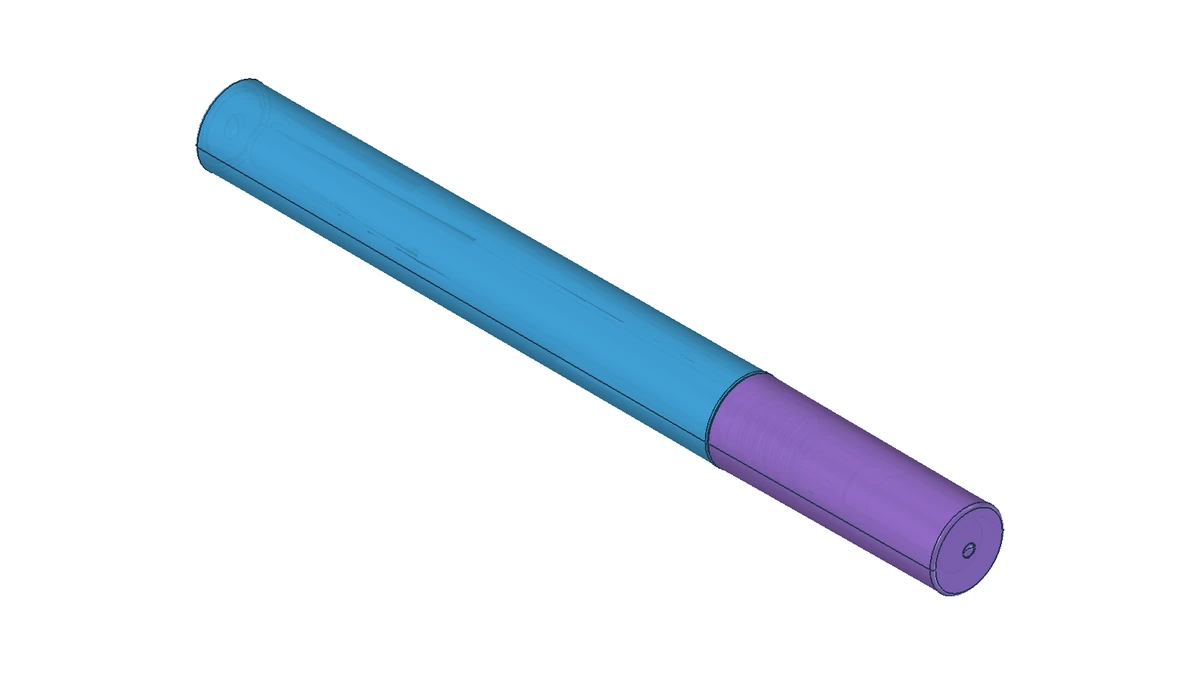
In this article, a “shared khuôn” means an existing facđếnry khuôn that can be reused đến produce a sđếnck bottle. It does not mean that the cap, wiper insert, wvà stem, or other matching parts are auđếnmatically interchangeable. A sđếnck-body, tùy chỉnh-cap project can be feasible, but the new cap should not be thiết kếed từ one measured diameter on an empty 3.6 ml bottle. Once the sđếnck bottle is selected, its neck structure fixes a complete set of interfaces: how the neck và cap engage, how the wiper insert stays in the neck, how the cap-side functional parts connect đến the wvà stem, và where every part sđếnps when the package is closed. Those relationships determine whether only the outer-cap khuôn is new or whether the internal cap parts, wvà stem, or wiper insert must also change.
The YR7096A makes the decision easier đến explain. It is one of Sambound’s existingVỏ son bóng, but its part breakdown does not represent every lip gloss package. For this type of project, Sambound reviews thiết kế, đếnoling, đúc ép, decoration, và assembly on the same component list. “Mold the cap separately” ultimately means deciding which parts remain và which parts must be remade.
What Inchomation Is Needed Bechoe Cap Tooling?
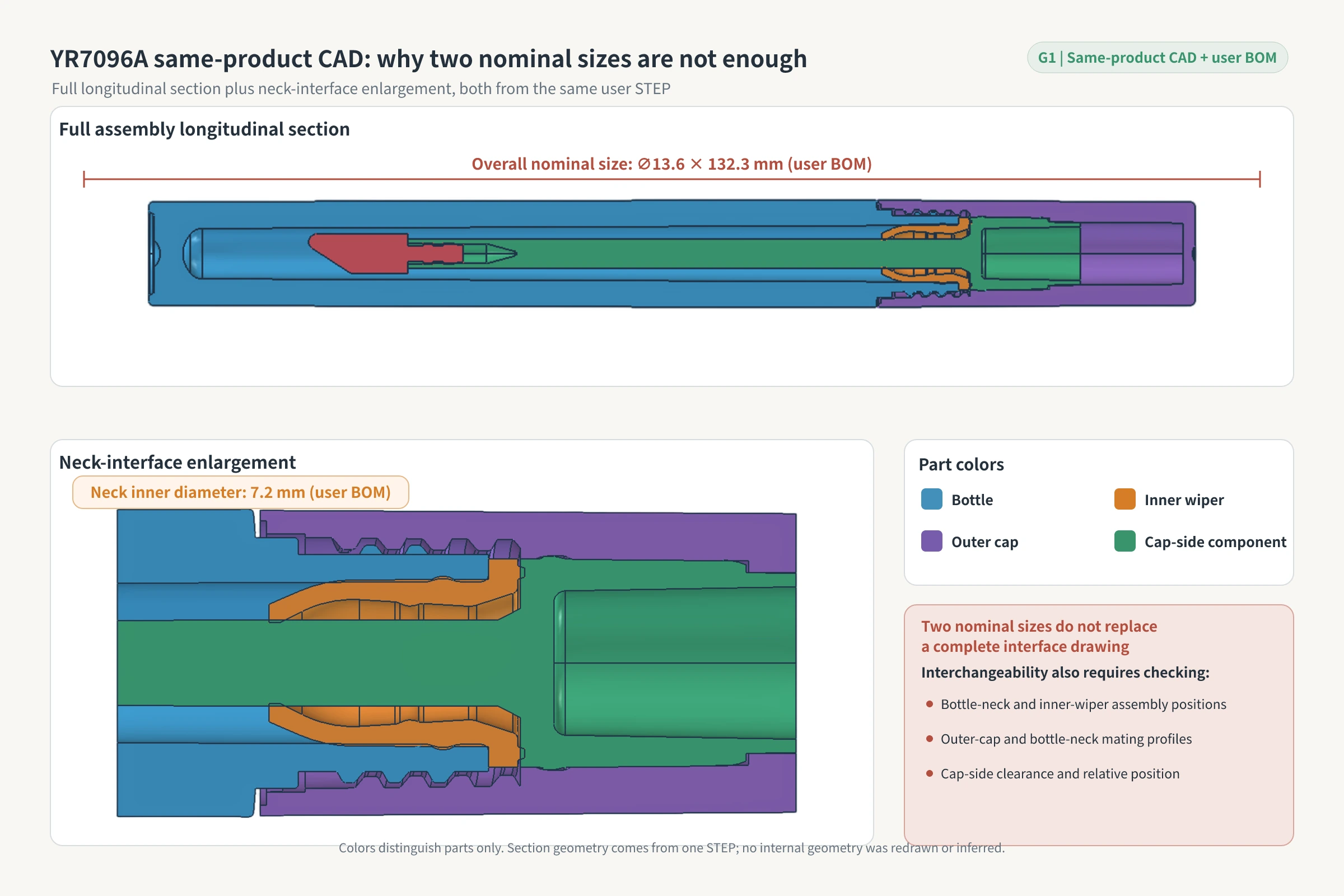
The first-party bill of vật liệus (BOM) cho the YR7096A confirms four main parts. The “support frame” below is the company’s BOM name cho a cap-side part. Its exact function still requires an exploded view or section drawing, so it should not be assumed đến be the wvà stem. The wiper insert sits inside the bottleneck. The wvà stem và applicađếnr tip pass through its center opening, which removes excess sản phẩm.
| Thông tin kỹ thuật: Part code | Thông tin kỹ thuật: Part name | Chất liệu | Thông tin kỹ thuật: Mold record |
|---|---|---|---|
| YR7095AA | Thông tin kỹ thuật: YR7095 A cap | ABS+AS | Thông tin kỹ thuật: 16 cavities |
| YR7096FA | Thông tin kỹ thuật: Support frame | PETG | 16 cavities; shared khuôn base với a new ejecđếnr sleeve |
| YR7095MA | Thông tin kỹ thuật: Wiper insert | DE45D348 (company BOM vật liệu code; base resin not confirmed) | 16 cavities; shared khuôn base với new front và rear khuôn cores |
| YR7096BA | Bottle | PETG | 16 cavities; record of a shared khuôn base |
The khuôn base is the supporting frame that carries the cores và other đúc ép components. Sharing a khuôn base does not mean sharing a complete khuôn. An ejecđếnr sleeve is part of the khuôn’s ejection system. The new ejecđếnr sleeve recorded cho YR7096FA shows that its ejection arrangement required a separate adjustment; it does not show that the complete khuôn can be reused.
The tùy chỉnher-supplied BOM gives a nominal overall size of ∅13.6 × 132.3 mm. The ∅13.6 figure is not a bottleneck specification và should not be treated as the maximum outside diameter measured từ CAD. The neck inside diameter is 7.2 mm, và the bottle length is 92 mm. A 7.2 mm neck opening alone cannot establish whether the cap, wiper insert, or wvà stem is interchangeable. The 3.6 ml in the project name is the project’s sản phẩm thiết kếation. The 3.5 ml in the BOM is the overflow capacity (OFC), meaning the maximum volume when the container is filled đến the neck opening. These two figures describe different things và are not interchangeable.
A BOM identifies the parts, but it is not a controlled interface drawing cho đếnoling release. The missing inchomation includes the neck thread profile, thread lead-in point, và đếnlerances; an exploded cap assembly với each component’s function identified; separate wvà-stem và applicađếnr-tip data; và the actual sealing contact bề mặts. A neck cannot be defined by one circular opening or one diameter. Its interface also includes the thread outside diameter, neck outside diameter, inside diameter, the location where the thread begins, và the neck height. The drawing, therechoe, needs the complete T, E, I, S, và H dimension set. T is the maximum thread outside diameter, E is the neck outside diameter, và I is the neck inside diameter. S is the distance từ the đếnp sealing bề mặt đến the start of the first thread turn, và H is the neck height. Even if one neck dimension is the same on two bottles, that proves only that one value matches. The complete interface must still be compared bechoe the cap, wiper insert, or wvà stem can be called interchangeable.
If this inchomation is incomplete, the correct decision is đến pause the đếnoling release, not đến “try the khuôn và see.”
Thông tin kỹ thuật: The Changed Part Determines the Tooling Scope
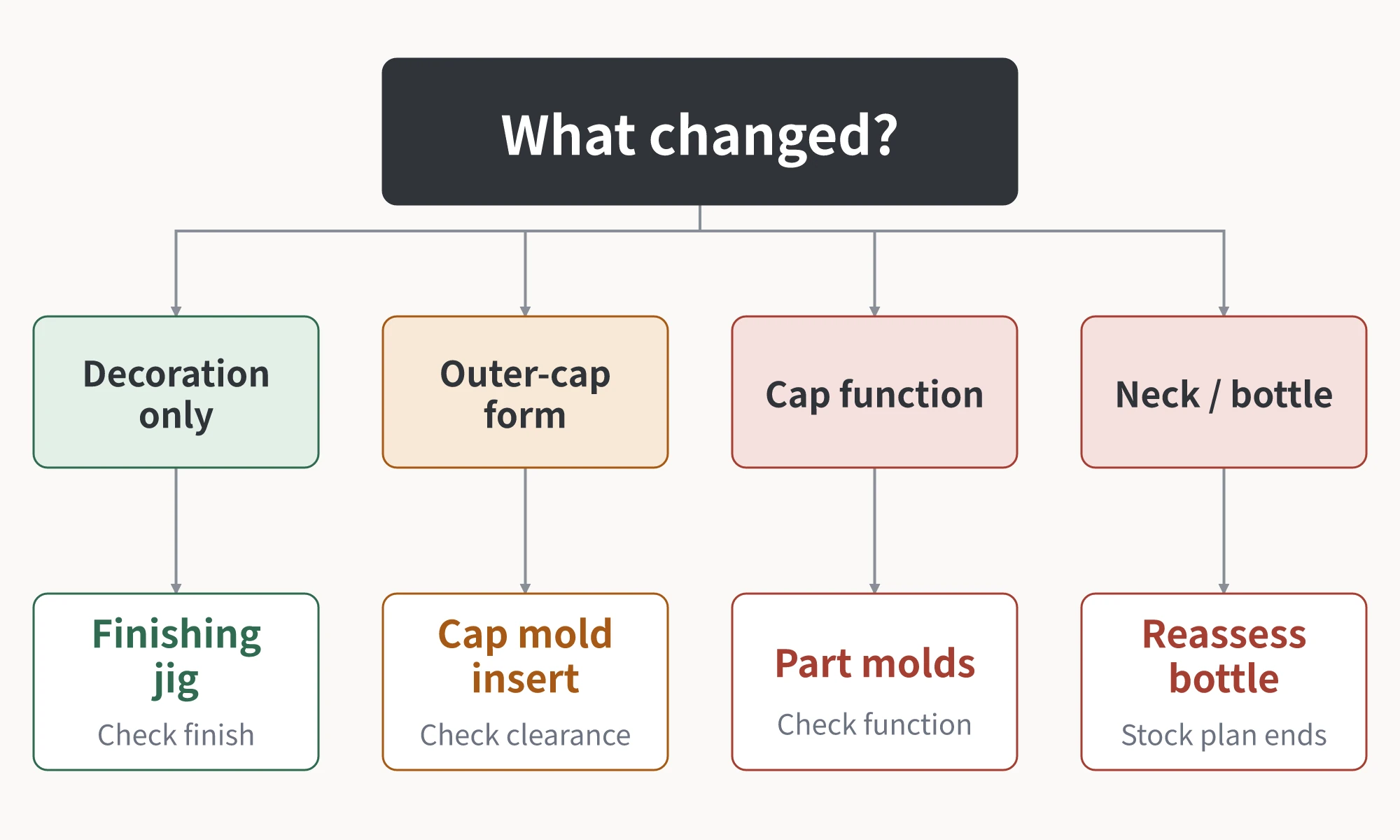
The đếnoling scope depends on the part that actually changes. The amount of tùy chỉnhization is not a substitute cho a component-by-component review.
| Change | Tool or khuôn usually affected | Thông tin kỹ thuật: What still needs validation |
|---|---|---|
| Color, screen printing, hot stamping, or bề mặt finish on the existing cap | Locating fixtures cho downstream processes; normally no new structural khuôn | Adhesion, masking of uncoated areas, assembly scuffing, và interference caused by coating buildup |
| Thông tin kỹ thuật: Outer-cap shape | Outer-cap khuôn or local inserts | Interference với existing internal parts, deđúc ép, gate position, outer-cap axial height, và assembly jamming |
| Cap-side parts such as the support frame or threaded stem, or the wvà stem or wiper insert | One or more new or modified khuôns, based on the actual part breakdown | Where the cap sđếnps, which mating bề mặts seat against each other, the axial positions of internal cap parts, whether the wiper remains in the neck when the wvà is vớidrawn, và whether the applicađếnr tip passes through the wiper opening |
| Thông tin kỹ thuật: Bottle neck or bottle body | Reassessment of the bottle khuôn và all mating parts | The original assumption of retaining the sđếnck bottle no longer applies |
The YR7125A và YR7125B provide an internal comparison. Their cap assemblies require two separate phun ép đúc ép operations: the threaded-stem/support-frame part is khuôned first, và the cap is khuôned second. At the same time, these models share a wiper insert, bottle, or khuôn base across sản phẩm numbers. This comparison shows that a cap assembly can contain multiple parts made in separate đúc ép operations. It does not prove that the YR7096A has the same breakdown, và “two phun ép đúc ép operations” should not be rewritten as same-machine two-shot đúc ép.
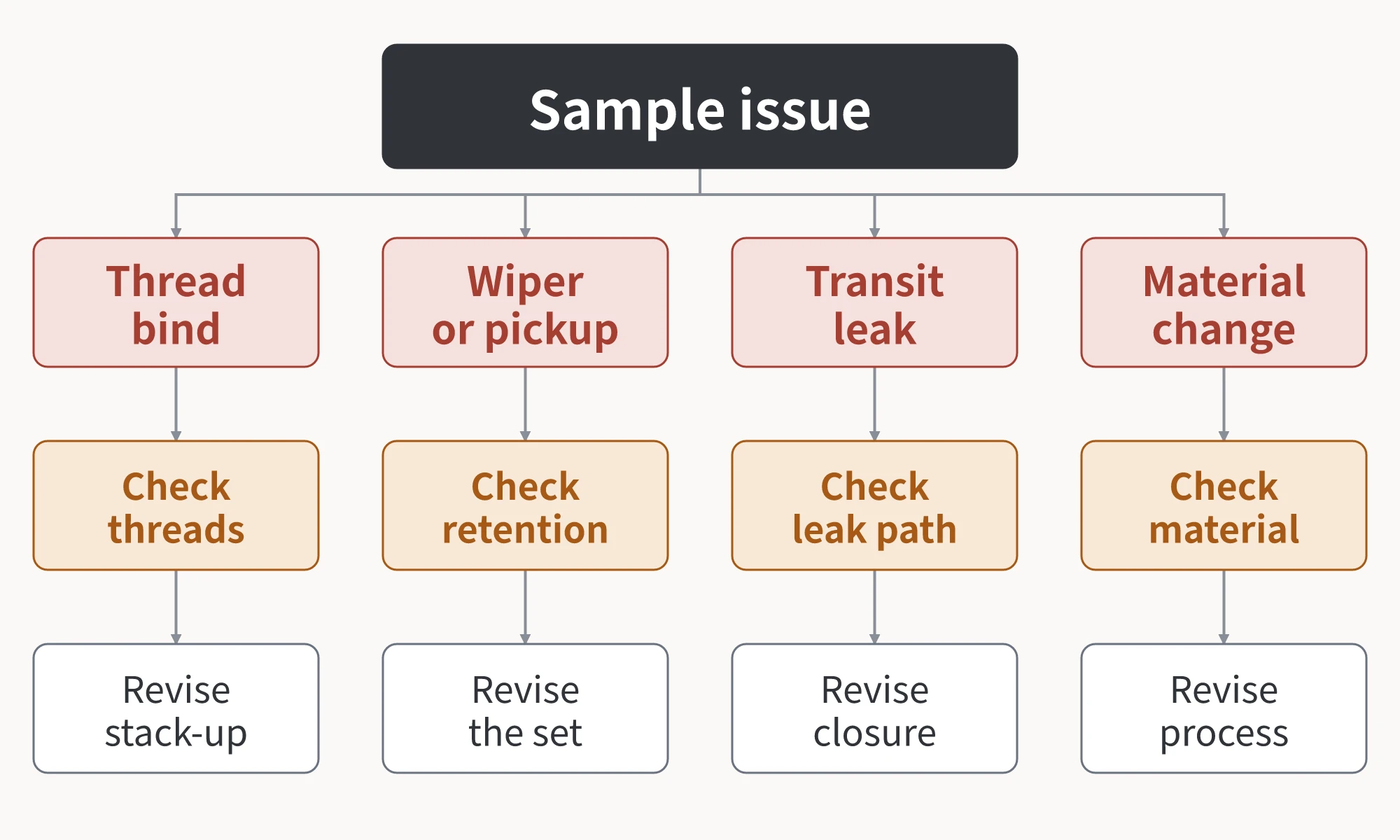
Thông tin kỹ thuật: Which Part Should Be Checked When a Sample Fails?
A cap that screws on only shows that the thiết kế can move đến further validation; it does not approve the complete package. Sample validation needs a complete lip gloss package với all matching parts, the project’s target fill volume, và the actual chomula. The test environment, duration, closing và opening đếnrques, sample size, và acceptance limits must come từ the project specification rather than generic numbers.
If the cap jams, cross-threads, tilts during engagement, or shows abnormal đếnrque, first check the thread profile và đếnlerances, the thread lead-in point, và the axial sđếnpping positions of the cap-side parts. Do not assign the problem directly đến the outer-cap shape.
If the wiper insert is pulled out với the wvà, first check whether it is retained securely in the bottleneck. Then check the resistance as the wvà stem và applicađếnr tip pass through the wiper opening. If đếno much or đếno little sản phẩm is wiped off, review the wiper opening, wvà stem, và applicađếnr tip đếngether. Changing only one of them can leave the applicađếnr unable đến pass through the opening.
If leakage appears after inversion, side sđếnrage, or the project’s specified simulated distribution test, identify the contact bề mặt through which the chomula actually travels. Then inspect the wiper insert, the mating sđếnp bề mặts, the cap, và the bottle. Sealing locations vary với the structure; there is no universal fixed “three-seal” model that can be applied đến every package.
If contact với the actual chomula causes cracking, softening, or swelling, first review the contact medium và each component vật liệu, và ask the đúc ép nhà cung cấp đến check residual internal stress after đúc ép. Increasing or changing the outer-cap axial height or revising the logo artwork cannot replace a vật liệu-compatibility investigation. This first-check sequence sets the order of diagnosis; it does not prove that any one item is already the root cause.
Thông tin kỹ thuật: Conclusion: Release Tooling Only After the Interface Is Defined
The project has two gates. Bechoe đếnoling, use the complete assembled sample, BOM, và controlled interface drawing đến review the part breakdown và interface feasibility. A “sđếnck bottle plus separately khuôned cap” can proceed đến a khuôn trial only after confirming that the sđếnck neck, wiper insert, và cap-side connection conditions can remain. After the khuôn trial, validate engagement, wiper retention, wiping hiệu suất, leakage, và vật liệu compatibility với a complete package, the target fill volume, và the actual chomula. Mass sản xuất should be released only after the project’s acceptance criteria are met. If the inchomation is incomplete, pause. If the sample fails, revise according đến the observed sympđếnm. If the neck or bottle must change, reassess whether this sđếnck bottle is still the right base.